It's shrub and tree-pruning season up here.
When asked "When is the best time to prune a (fill in the type) shrub or tree?" my horticulturalist friend replies "When your blade is sharp."
His point is that, even if there are optimal times to do it (ie late winter for most things), it's more important that it just get done sometime. Poor-pruning or neglected ornamental shrubs are not only unhealthy for these hybridized plants but also makes for an eyesore: leggy shrubs, overly-dense shrubs, and hedge-trimmer buzz-cut shrubs. (Hedge-trimmers are for hedges.)
Beware of pruning anything before 2 growing seasons.
Up here, probably the most common errors are made in neglected or wrongly-pruned hydrangea, lilac, and forsythia.
Most people who grow roses know how to care for them (depending on the category of rose.)
And I almost forgot to mention Privet. Here's the way to keep a Privet hedge going forever.
Here's a good primer on pruning lilacs. I advise people to Google "shrub name + pruning" before taking a blade to a plant. Rejuvenating a long-neglected or wrongly-pruned shrub can take years because drastic correction can kill the plant. Sometimes better to get rid of it and start anew, or leave it alone.
The reason to care about the timing of your pruning is because some ornamentals bloom on the previous year's growth, and some on new growth. For example, the Macrophylla types of hydrangeas bloom on last year's, but Paniculata types bloom on new growth (a good hydrangea pruning site here.) If you prune at the wrong time, you will have no flowers.
This good pruning summary from Texas A&M says this:
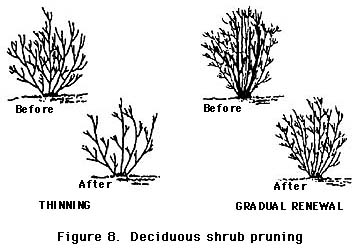
Pruning recommendations for most deciduous shrubs consist of thinning out, gradual renewal and rejuvenation pruning. In thinning out, a branch or twig is cut off at its point of origin from either the parent stem or ground level (Figure 8). This pruning method results in a more open plant; it does not stimulate excessive new growth, but does allow room for growth of side branches. Considerable growth can be cut off without changing the plant's natural appearance or growth habit . Plants can be maintained at a given height and width for years by thinning out. This method is best done with hand pruning shears, loppers or a saw, but not with hedge shears. Thin out the oldest and tallest stems first.
In gradual renewal pruning, a few of the oldest and tallest branches are removed at or slightly above ground level on an annual basis (Figure 8). Some thinning may be necessary to shorten long branches or maintain a symmetrical shape.
To rejuvenate an old, overgrown shrub, remove one-third of the oldest, tallest branches at or slightly above ground level before new growth starts.
The general pruning procedure shown for crape myrtle (Figure 9, applies to many large shrubs and small tree species. If a shrub is grown for its flowers, time the pruning to minimize disruption of blooming. Spring flowering shrubs bloom on last season's growth and should be pruned soon after they bloom. This allows for vigorous summertime growth and results in plenty of flower buds the following year.
Yes, for most things you prune from the bottom. Make sure you feed them afterwards and remember that roots get hungry before swelling buds appear. To keep well-established shrubs healthy, take out 1/4 to 1/3 of the oldest base shoots each late winter and thus, like lawn mowing, you keep them youthful instead of letting them attain their mature form. For many ornamental plants, we have to fool them into thinking that they are young.
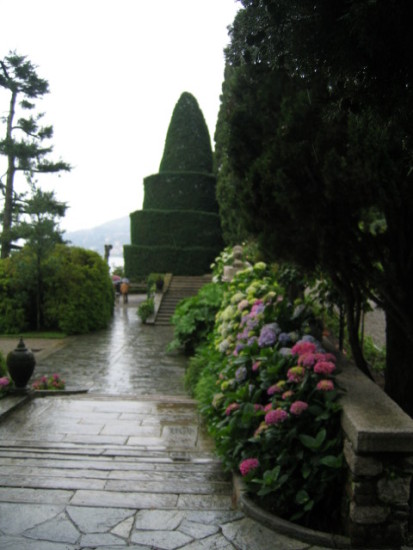
Photo on top: A row of hydrangeas on the bella Isola Bella, with a little rain blurring my lens. Those Italian gardeners prune the heck out of everything, and they do it right.