We are a commune of inquiring, skeptical, politically centrist, capitalist, anglophile, traditionalist New England Yankee humans, humanoids, and animals with many interests beyond and above politics. Each of us has had a high-school education (or GED), but all had ADD so didn't pay attention very well, especially the dogs. Each one of us does "try my best to be just like I am," and none of us enjoys working for others, including for Maggie, from whom we receive neither a nickel nor a dime. Freedom from nags, cranks, government, do-gooders, control-freaks and idiots is all that we ask for.
As I mentioned, I want to write more as my system continues or alters. Sadly, it's been nuts for slightly over 2 weeks with a lot going on. I can share information or a few things, because it's been mostly good, but there are a few items.
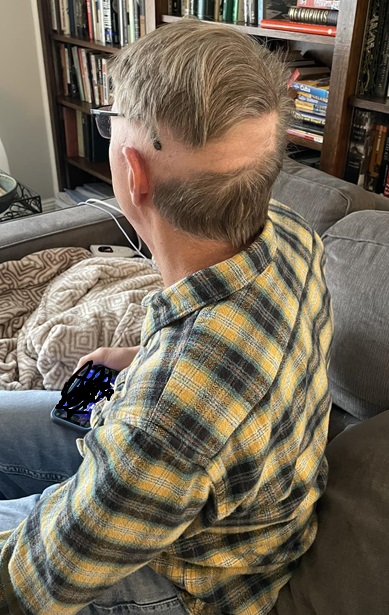
1. Due to Chemo and Radiology daily (5 days) I have seen my health drop. Not significantly, but enough to definitely feel awful. Nausea, then treated. Weakness, handled by some improvements which manage a bit more extensively. The last 2 weeks allow the assistance of steroid assistance allowed in lower levels. Headaches higher the past 3 days. Treatments allowed in higher levels. As mentioned, my hair is long cut (and I'll share my lovely look now lately).
2. Overall feeling better in treatment as weekly doctor meeting have opened the assistance and treatment gains. Greatly appreciated. I have been in the city twice over 4 years, will add tomorrow and next week - though weakness is down slightly.
3. Radiology lost one day due to errors wasting 3 hours waiting last week - my day shifted by one day so my last day is 4/15 Monday - but I am heading immediately to leave Mrs. Bulldog behind as her parents will allow me to resolve in FL as I'll need restness and softness at the local beach. It will be helpful. Great to have healthy in-laws.
Mortality is a strange thing. We're here, then we're not. Our friends and family are here. Then they're gone. We focus a lot on things that impact us while we're alive, as we should, to make our lives more interesting and enjoyable. Outside of rare conversations on spirituality or religion, many people spend little time thinking about saying good-bye or preparing for what is inevitable, aside from taxes. It's a strange thing that death is actually one of the more important parts of life, after perhaps birth, and just like birth we have little to no control over when it takes place. We have some control over ourselves and our lives during the interim period between birth and death, though. Maybe that's the point?
Two things occurred in the last week which started me thinking about mortality and specifically my own mortality. They were both events which get most people thinking. First was a discussion with my in-laws about their end-of-life planning, as they have now both passed their mid-80s. Second was a notice that a classmate from high school had died, not someone I was extremely close with, though we had a relationship which had recently ended poorly.
I repost this about every four years. I think, a good reminder. Below is a repost of a column I wrote at another venue for Labor Day 2006 and posted again here in 2011 and 2014 and 2018:
What remains of Labor Day? Some speeches about the hard work of our parents or grandparents, and some newspaper articles about current difficulties getting established or obtaining benefits for today’s workers.
Conservatives are distinguished by particular respect for the hallowed history from which current and future advantages spring, without which we would be rootless and at the whim of passing fancies or incitements.
Supposedly, the virtues and rewards of hard work are among these cherished principles.
The Left trumpets redistributive schemes from the affluent or hard working to the poor or lazy, most of which have relatively little benefit to the poor but create newly enriched bureaucrats and union leaders.
Conservatives’ answer is usually more along the lines of how to preserve and protect the fruits of the labor by those in the middle and upper rungs of the economic ladder.
Sebastian Mallaby steps on the Left and Right’s toes today in the Washington Post.
Mallaby points out the futility of most of the Left’s prescriptions, to the “point the left begins to seethe.” He then focuses on reducing tax incentives that mostly accrue to the middle and upper classes, to free up a quarter of them for $180-billion that could be used for increased earned income credits and reduced regressive payroll taxes.
The problem with Mallaby’s arguments is that they are another, albeit better, form of redistribution, and government has repeatedly proven its penchant for wasting such billions on other than targeted needs. More necessary is the unbridling of energies and rewards for labor. That requires investment which creates demand for labor, and skills-oriented education that creates competitive wage earners to fill those new openings.
As Mallaby correctly argues, many of the poorest workers are in service trades not impacted by international competition. Such positions that were once beginning rungs on the ladder now face a gap of steps up due to lack of skills.
Instead of redistributing tax incentives, more needed is redistributing our already huge tax outlays on education from schemes that create administrative and union positions, and posh campuses, toward greater vocational and skills education.
That honors labor, by providing the tools for all to benefit from labor.
Each year at the start of the Jewish High Holidays, Rosh Hashanah, I ask a question, usually how to be more constructive and helpful in my personal relationships in general or with a special person. The answer eludes me and it troubles me that I can't see the way.
As I go through the days of prayer and reflection, various alternatives come from my mind, only to be rejected as too unreal or hollow or evasive or inadequate to the need.
On Yom Kippur, which begins tonight, the longest night and day of prayer, and of a 25-hour fast, the worry that I won't find the answer gets more urgent. My fear rises of not finding the answer. As my mind gets submerged in repetitious prayers and wanders, as I get more light-headed with hunger, as the prayers of repentance get more fervent, an answer always comes late in the day, from my heart.
It's never what I thought it would be. It is complete. It is not complex, though requires more focus, discipline, understanding. It always works for the coming year.
Life is only complicated when avoiding simple truths.
The miracle brings me closer to the person I want to be. It keeps me coming back for more.
Each year around this time I need to refresh my (poor) fly-fishing skills. I get out in the yard and renew some muscle memory. It's a beautiful, silent form of outdoor recreation.
This guy is a good, articulate teacher of this delightful sport which is far more challenging - more sporting and more aesthetic - than trolling, lure-casting, or Southern-style bass fishing with a big outboard engine.
As we always say here about fishing and hunting, if you really need the food to feed the kids, go to the supermarket....or put a worm on a line with a lead sinker and a barbed hook.
Fly-fishing is a good sport for gals, too, although some of my pals' clubs do not allow females on the grounds. Guys need their own places to act like kids, free of female judgement.
Peaches ripen late up here in New England. Yes, there are peach varieties which thrive in the North.
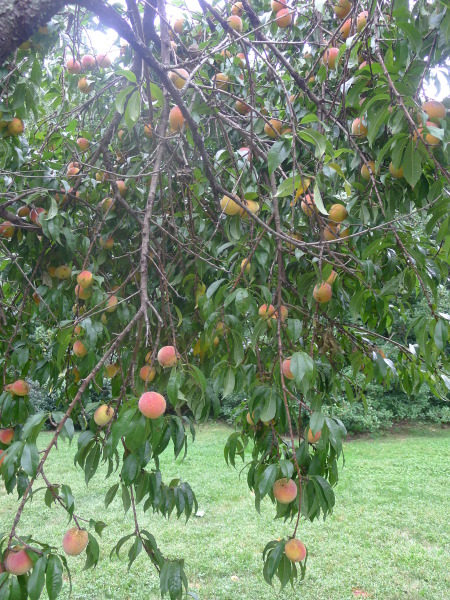
As of now, I have had five friends over to pick grocery-bags full and have delivered bags to others. I'll ask a daughter to take a bag home to NYC today. And I have made substantial batches of peach jam, peach chutney, and canned spiced peaches. I am close to peached out with God and nature's abbondanza.
Still, this is a pic of the tree yesterday after all that. Plus the windfall from yesterday's thunderstorm. The local deer do not seem to like peaches. Neither do the turkeys. Squirrels like them, but it's more of a crop than they can make a dent in.
I use no sprays, no fertilizer - out of laziness as much as anything else. These peaches are as sweet as honey. I guess I'll make more jam, but let's consider peach pie, peach crumble, and peach buckle (that's old-fashioned).
Problem is that Mrs. BD and I are currently on low-carb, high protein heavy-work-out diet plans in an effort to delay the discouraging and ennervating effects of age and entropy.
Anyway, there are two types of peach pie: a custardy one and the classic plain one. I like both but maybe prefer the more custardy one. There are many variations on both themes.
Now Peach Crumble. Dynamite with some vanilla ice cream or heavy cream. I salivate as I write this.
- Took a drive yesterday to Long Island City (part of Queens, NYC).
Long Island City (L.I.C.) is the westernmost residential and commercial neighborhood of the New York City borough of Queens. L.I.C. is noted for its rapid and ongoing residential growth and gentrification, its waterfront parks, and its thriving arts community.[1] L.I.C. has among the highest concentration of art galleries, art institutions, and studio space of any neighborhood in New York City.
Went there to see a one-act play festival at The Secret Theater. Golly, LIC is changing. High-rises everywhere under construction. We had supper at a superb tiny French bistro, LIC Market. Everybody who works there is French. You can park on the street in LIC, no problem. As a daughter says, a gritty mix of industrial, residential, and business: Real NYC.
We meandered through Astoria while en route. Got a little lost. I have never been to Astoria. It is one of the most pleasant, middle-class, and remarkably multi-cultural places I have seen. Of all things, a large Maltese population too- over 20,000. Who'da thunk it? But if you think about it, there is little to do in Malta.
It's not too far from where the big game - Jokevitch vs. Federer - is today. I can't miss that.
- Out-of-towners like us are always more familiar with Manhattan, with its totalitarian arithmetical road grid. Here is something wonderful, probably worth a trip from anywhere: Picasso, Completely Himself in 3 Dimensions. It's on my to-do list. We never miss major Picasso shows, because his craft and imagination blows my mind.
- Something else fun: Immersive (aka Interactive) theater in NYC. I have heard reports about how much fun it is. A friend had his daughter's Sweet 16th party for 25 gals at one of the scavenger hunt "plays," and a couple of people told me about the MacBeth one.
- At my point in life, a visit to NYC is always good for a dose of hyper-stimulation and amazement in the works of man but I am always happy to return to my quiet more pastoral home where the loudest noise is a cricket. If I won the Powerball, though, I think I'd buy a brownstone (with working fireplaces) in the West Village in a flash. I need both. Prosperous people in NYC belong to elite clubs as private retreats, and have dachas in the country too. I could handle that.
My lovely daughters live as if they owned NYC despite living on a shoestring. Fearless, undaunted, resourceful and adventurous, they just take daily bites of that apple as so many young people need to, and shoot for the stars. No bourgeois instincts, it seems - like their Mom. All the same, they do love to come home sometimes for love, free food, and to hit some tennis balls like the prepster kids they are.
Mass multicultural immigration is a highly disruptive, if not destructive, event to an established, stable culture. These things used to be called invasions because, even without force of arms, the power of masses of unwanted people can be difficult to resist (see Mexico/US).
Regular people know that mass immigration will assimilate with difficulty, even if they want to. Regular people know that they will not value or respect their history, their legacies, their traditions, as they do. This is why regular people do not welcome mass multicultural invasions.
For us ordinary people, it's much more about preserving a culture and a neighborhood than it is about economics.
Now on 83 acres with some imperfectly-maintained gardens, the place has little use. It would make a fine campus. We had dinner with friends last night who love to explore the more obscure corners of NYC. They found the place to be fascinating, but Staten Island itself not so much.
Despite countless cuts, slashes, and penetrations of my feet over the years from broken shells, stones, sharp twigs, coral, etc., I have always resisted water shoes. After my last visit to the beach in 2014, Mrs. BD sent me to the store to get some.
They are excellent. You can swim in them, and they protect you from burning-hot sand too. Now I will not go to a beach without them.
Another good use of them is exploring shallow waters for critters and things at low tide. No more slipping on rocks or getting a toe sliced by a sharp oyster shell. They might look a little pussified, but they can keep you functional. I also use them for kayaking.
Private industry employers spent an average of $31.39 per hour worked for employee compensation in
June 2015, the U.S. Bureau of Labor Statistics reported today. Wages and salaries averaged $21.82 per
hour worked and accounted for 69.5 percent of these costs, while benefits averaged $9.56 and accounted
for the remaining 30.5 percent. Total compensation costs for state and local government workers
averaged $44.22 per hour worked in June 2015. Total compensation costs for civilian workers, which
include private industry and state and local government workers, averaged $33.19 per hour worked in
June 2015.
Employees of Federal Contractors to Get Paid Sick Leave " 'Contractors should take note that this requirement
does not take effect immediately and is not self-implementing. It takes effect
in 2017 and only after the Department of Labor issues rules,' [said Shlomo Katz,
a government contracts lawyer at Brown Rudnick].... 'The executive order
requires covered contractors to provide sick leave in addition to vacation and
other fringe benefits already required by the Service Contract Act and Davis
Bacon Act,' Katz added. 'Some will argue that the President is exceeding his
authority by mandating sick leave because Congress has already legislated via
those two laws (SCA and Davis-Bacon) that government contractors provide
'prevailing' fringe benefits to workers, and there is no indication that the
President has done any studies to determine that sick leave is a "prevailing"
fringe benefit.' " (Bloomberg BNA)
The Congressional Budget Office (CBO) just reported that President Obama has already effectively raised the minimum wage.
How so? The Obamacare employer mandate requires employers that do not provide “qualifying” health benefits to pay a steep penalty. Few minimum-wage employers provide Obamacare-compliant health coverage. So the penalty adds to their cost of hiring—and thus reduces employment. As the CBO puts it:
[S]ome employers will respond to the penalty by hiring fewer people at or just above the minimum wage—an effect that would be similar to the impact of raising the minimum wage for those companies’ employees.
Increasing the minimum wage would have two principal effects on low-wage workers. Most of them would receive higher pay that would increase their family’s income, and some of those families would see their income rise above the federal poverty threshold. But some jobs for low-wage workers would probably be eliminated, the income of most workers who became jobless would fall substantially, and the share of low-wage workers who were employed would probably fall slightly.
I've always been told that the pursuit of personal "identity" with its "personality integration" and "self-realization" was a distinctly modern and Western notion. Perhaps a too-precious conceit of artistes and suchlike.
In recent years, we have even used something called "identity diffusion" as a diagnostic marker. It's a thorny topic that very few people ever think about.
When I meet a new patient (or sometimes just a new person), I never ask "Who are you?" I just ask "Tell me about yourself" or "Tell me about your life." I once met a fellow who told me that he was an "unresolved self." He was one of the most pleasant, well-put-together people I have ever met.
It is often said that psychotherapy and psychoanalysis are about inventing comprehensible, presumably explanatory narratives. Well, our narratives change with time. We evolve with time and experience; sometimes with awareness of our flaws and sometimes with awareness of God.
In the car, Great Minds of the Western Intellectual Tradition. The lecture on Pascal is mind-blowing, a math and physics genius who invented the first binary "computer," who gave his life to Christ. Also, the lecture on Francis Bacon, where the prof reviews Bacon's False Idols of Knowledge and Science (from The New Organum (1620):
- The Idol of the Tribe: the arrogance that comes from agreement with one's colleagues - The Idol of the Cave: bias coming from one's psychology and background, and the vanity of attachment to an idea - The Idol of the Marketplace of Words: Wherein words take the place of real knowledge. - The Idol of Theater: Our received philosophical and scientific views as given by tradition and authority
It's better than college. Buy them on sale, and don't pay the library prices. Or trade with friends and neighbors, as we do.
You will thank me for this free ad for them. We are reviewing the big topics we have forgotten, or didn't have time to take in school. Things we need a guide for. Lifelong learning, like lifelong fitness, is a cliche but for good reason.
For me, it makes anything tasty - including burgers. Great with cheese and cream cheese. All cheese requires some fruity accompaniment. Really fine as a meat glaze. Heck, I dip my breakfast hard-boiled egg in some, and put some on scrambled eggs. I put some on rice too. It's not for little children.
Are not just for breads and toast. I think, best of all with cheese and meat. Or cream cheese or yoghurt. Not to forget on crepes and Swedish Pancakes.And venison requires a jam or jelly on the side just as pork requires applesauce. Lean meats need a kicker.
Apple Butter
For me, best on ham, chicken, or turkey sammiches. Also good with the things listed here.
Lemon Curd
Supposedly used for scones, but I like it on fresh fruit or I won't eat the fruit - except raspberries
Litchfield County is the quaintest, best-preserved antique corner of Connecticut. The area was well-settled in the early 1700s and, judging by the size and style of all of the old farmhouses, these were prosperous farmers.
In this area, most of the old farms have been converted to weekend estates for the 1%. The antique places are perfectly-maintained. Old barns everywhere, still looking good. Thanks for all that charm and beauty, 1%ers.
We went over there and took a drive through Southbury, Woodbury, Washington, and Washington Depot. Nice. We were en route to see the Hollister House Gardens in Washington (good pics on their site). Mrs. BD wanted to check it out and to maybe get some garden inspiration.
The garden "rooms" are strongly architectural with walls and hedges, lots of stone, while the plantings are a jumble - or maybe not - probably a well-planned jumble. Engish-style gardens, the sorts of gardens my Mom aspired to. It's the owner's life work.
We had an early supper at the GW Tavern. Good fish. Too much food. I'd put the place in the "Stuff-and-Waddle" category of restaurant, what my sister calls "Sticky Bun restaurants."
My pics of the garden below the fold might or might not inspire your gardening -
Unless you need to carry lots of stuff, kayaks have mostly taken over from canoes for water recreation. I grew up with rowboats. Kayaks are much more fun. Some links:
Our hosts in Wellfleet last week provided abundant and elegant breakfasts. Fresh fruits first, of course. I am not a fruit fan, but with a good dollop of Trader Joe's Lemon Curd I can enjoy them.
They provided fruit forks and knives with the beautifully-presented fruit course. Civilized and quite effective tools for all fruits and berries. Yes, old-fashioned. We need some.
With decent cutlery and Lemon Curd, I may yet become fruit-tolerant. Is fruit "healthy"? Not at all. It's really just nature's dessert.
Just back from spiritually-necessary annual pilgrimage to the Cape and Wellfleet, MA. Pics and tips for Wellfleet-lovers when I organize a travelogue post or two.
Besides doing everything else outdoors (swimming in Bay, harbor, several ponds, body-surfing in ocean with seals and sharks, taking a 2 1/2 hour hike which few know about, etc.), we kayaked twice daily - at dawn and before or after supper - thanks to Jack's. Jack will deliver and pick-up, no matter where. Using Youtube instructions, and encountering some tough sledding in southern New England salt waters, and the Hudson River, and last week on Nauset, we have been forced to improve our kayaking technique for a couple of years. "Use your core, not your arms!" God gave us our transverse abdominis for a reason. Having owned lots of boats of many sorts during my life, my craft of choice right now is the body-powered kayak.
Portrait of my handsome feet on Higgin's Pond, 7:30 am this morning. Ospreys overhead, Great Blue Herons all about, trout jumpin'. Water lilies in late bloom. Nice. No person there except me and Mrs. BD.
The number of so-called "expediters" is a valuable signal for how complex and damaging a city's regulations have become. These middlemen manage the constantly changing rules and endless delays in processing that come with doing business with the city. New York City's expediters once numbered between 300 and 400; today they total more than 8,300 strong. This complexity generates a new business opportunity for regulatory experts. Larger, incumbent businesses can manage to navigate this process, but it is much harder for the small businessman, particularly if he is working a 9-to-5 job or if English is his second language.
I saw that my three kids are a team. They are all quite different in interests, temperament, etc., but they support each other, help each other, enjoy each other, text each other, love each other. Bonded despite all of their differences in literary tastes and curiousnesses. Fortunately but probably not by accident, we all have dwellings within 40 miles of each other (2 have beginning NYC careers, and the third did but moved on/out). My theory is that every kid needs to confront NYC at least in youth. Good for humility if nothing else.
As readers know, I get a huge kick out of NYC. Have theater tix for next Sat., and dinner, which is good, but just wandering around is a blast for a country boy like me.
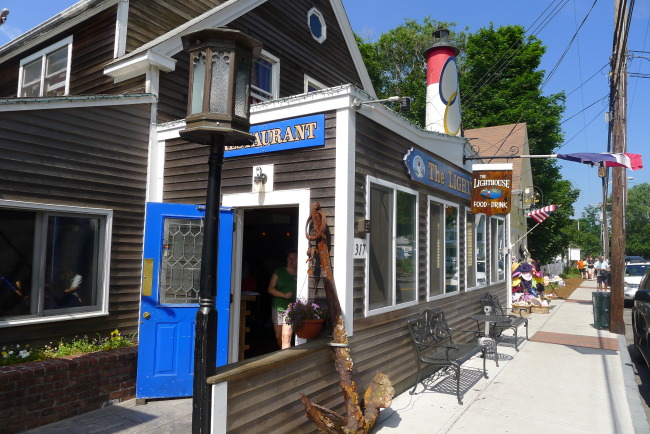
It is a comfort and a pleasure to a middle-aged fellow to see that they will remain a bonded family when we parents are dead and gone. I imagine their future Thanksgivings and Christmases, and maybe continuing the ritual Cape Cod family reunions with our annual family morning Wellfleet Triathlon with all of my sibs and any available kids (bike around 15 miles ending up at Long Pond, race across Long Pond and back maybe 1/2 mile or more and try not to drown, then run about 7 miles back home for a hearty breakfast. Better yet, to the Lighthouse for blueberry pancakes, bacon and eggs). Family traditions are important life foundations. Body-surfing in the ocean in the cool north Atlantic. The annual family baseball was good too. Batter Up! My Mom at 84! She knew how to hit a baseball and to do lots of other things too.
Their being fond of, and grateful to, their parents is good too. Already, they will drop anything to give us a hand when needed. Blessed, I guess. Will do the same for them as best we can.
Who is to blame for this? Weenie Dads? Tort lawyers? Government? Mom-headed households? Truth is, when I was ten I would disappear all day on bikes with friends, exploring woods, swimming illegally in reservoirs, building forts (snowball fights in winter, rock and stick wars in summer), shooting BB guns, fishing, sailing a Sailfish, playing vacant-lot baseball, shooting hoops on the asphalt-covered schoolyard, enjoying occasional fistfights, stealing candy from the candy shop, smoking cigarettes stolen from parents, teasing girls (mainly the ones we liked). Home by dark of course. That was the rule.
Normal stuff. The wife says I turned out fine.
If your kid doesn't come home dirty and bruised, with a mouth full of lies and the occasional broken bone, it's a shame. But I guess the boys play video games all day now and rot their brains.
I posted about the Cumberland Swing a few weeks ago. The good guy who makes those heavy swings for covered porches is excellent but has trouble finding time to make them. The Porch Swing Company makes similar ones for half the price. Perhaps not built for a 200-year life, but pleasant. Made by Amish.
In England, they call it "garden croquet" as opposed to formal croquet on a graded, manicured court.
We have neither a backyard pool nor a backyard tennis court, but we have an outdoor ping-pong table in the barn and, of course, a good English croquet set.



 Peaches ripen late up here in New England. Yes, there are peach varieties which thrive in the North.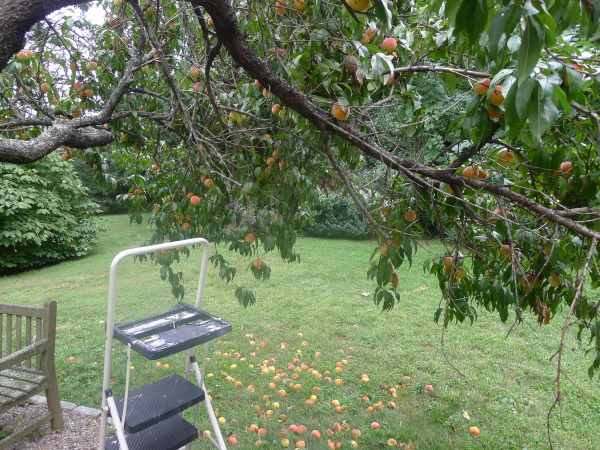
 - Took a drive yesterday to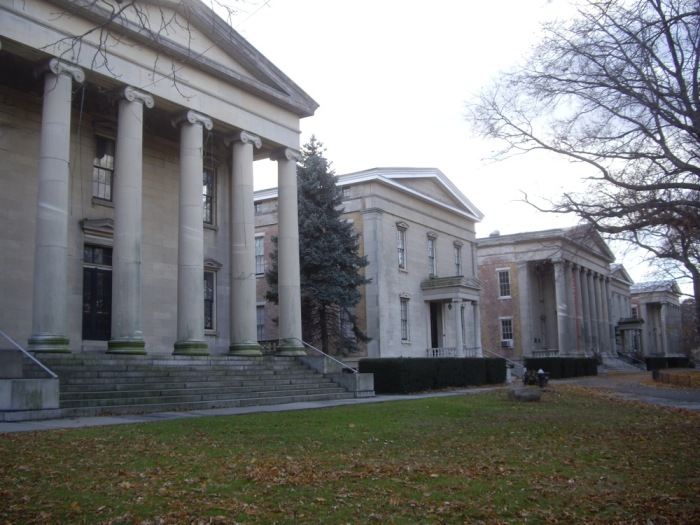
 Man, I love them. Will make some this week. Just need to pick up
 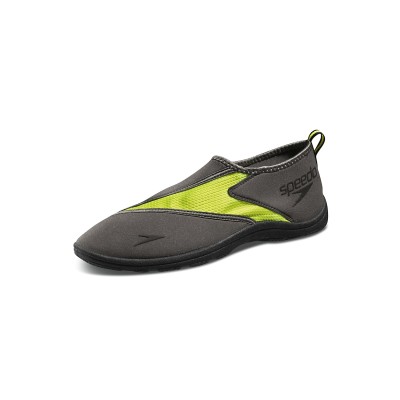 Despite countless cuts, slashes, and penetrations of my feet over the years from broken shells, stones, sharp twigs, coral, etc., I have always resisted water shoes. After my last visit to the beach in 2014, Mrs. BD sent me to the store to get some.
 I've always been told that the pursuit of personal "identity" with its "personality integration" and "self-realization" was a distinctly modern and Western notion. Perhaps a too-precious conceit of artistes and suchlike.

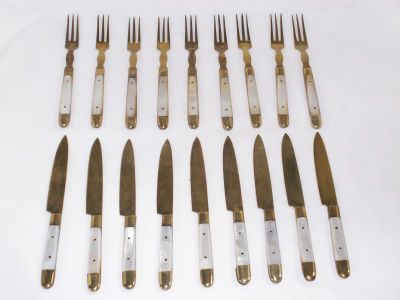 Our hosts in Wellfleet last week provided abundant and elegant breakfasts. Fresh fruits first, of course. I am not a fruit fan, but with a good dollop of Trader Joe's Lemon Curd I can enjoy them.

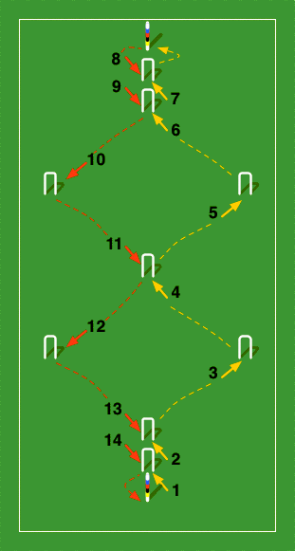 In England, they call it "garden croquet" as opposed to formal croquet on a graded, manicured court.