|
Maggie's FarmWe are a commune of inquiring, skeptical, politically centrist, capitalist, anglophile, traditionalist New England Yankee humans, humanoids, and animals with many interests beyond and above politics. Each of us has had a high-school education (or GED), but all had ADD so didn't pay attention very well, especially the dogs. Each one of us does "try my best to be just like I am," and none of us enjoys working for others, including for Maggie, from whom we receive neither a nickel nor a dime. Freedom from nags, cranks, government, do-gooders, control-freaks and idiots is all that we ask for. |
Our Recent Essays Behind the Front Page
Categories
QuicksearchLinks
Blog Administration |
Monday, July 26. 2010Who needs one?An email from a buddy:
I don't need one and do not want one, but it's an interesting firearm from an historical point of view. Everything about the Type 14 here. Wednesday, July 21. 2010Cape Cod duck huntingIt's time to plan hunting trips. I know of two guide services that host Cape Cod duck hunting - mostly, but not only, sea ducks. November-January: Cape Cod Sportsmen and East Coast Guide Service. The latter even offers an Eider recipe: Eider Cape Cod. If you aren't planning to eat 'em, you shouldn't shoot 'em. Here's one of Capt. Perez' Eider hunts in Cape Cod. These guys are good shots, and make it look far easier than it is even though Eiders decoy readily:
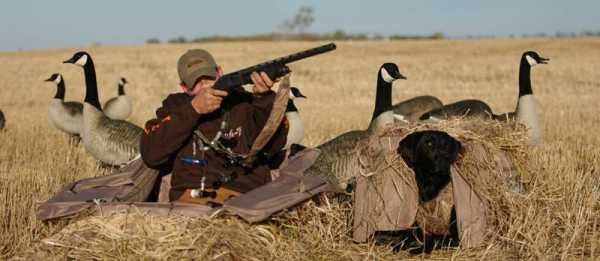
Tuesday, June 1. 2010A remarkable duck blindFive or six more months until duck season. A friend sent me these photos of a splendid, if surrealistically overblown, duck blind. It has to be in Arkansas.
Posted by Bird Dog
in Hunting, Fishing, Dogs, Guns, etc., Our Essays
at
18:25
| Comments (10)
| Trackbacks (0)
Thursday, May 20. 2010Phly Phishing plus My Phishing PhilosophyMy post about Mahi and Captain Beardsley’s catch the other day brings me around to fishing the fly. This time, we’ll concentrate on salt water although some of the techniques and gear I’ll mention can also be used for big fresh water game fish. However, before I launch into a short treatise, I’d like to spend a paragraph or two on my personal fishing philosophy. Izzak Walton said “Angling may be said to be so like the mathematics that it can never be fully learned.” He also said “ God never did make a more calm, quiet, innocent recreation than angling.” While certainly true in some ways, neither statement quite explains the whole attraction to the sport. Fishing, both bait/reel and on the fly can be as complex or as simple as you wish. Basic arithmetic is simple, quantum physics is complex – both are mathematics. A bobber, cane pole with hook and worm are simple – big game reels with three stage gearing, auto-clutch drags and tension monitors on custom carbon fiber rods, ceramic roller guides and high strength butts are complex. Still fishing for pan fish is calm, quiet and relatively innocent – big game fishing contains the excitement of the chase, the cast, the hook up and the catch. While Izzak had the right idea, he didn’t quite carry it far enough. Then again, he lived in a relatively simpler time. My personal philosophy when it comes to fishing is simple is better. I learned this when I was First Mate to Captain Jim Hendricks during high school summers crewing the 47’ Post sportfisher “Blue Horizon” out of Marblehead, MA. Captain Hendricks’ approach to fishing involved solid gear, easily repairable/easy to use, simple rigging techniques and a small variety of artificial/frozen bait. He told me time and again it was our job to know where the fish were, remembering the time of day, the weather, the state of the tide and what worked. And as fish are basically stupid, the rest is easy. This philosophy has served me well over the years. My selection of salt water fly rods are all custom made (by me) using Shakespeare Ugly Stick blanks in different lengths. Most of the time, I use the 8’ length in medium with a very fast action the guides set along the spine rather than opposite the spine of the rod. Believe it or not, there can be a difference both in casting and in striking power in how the guides are placed. Aligning the guides along the spine gives a much stiffer response while maintaining the proper casting and striking action. If you aren’t into rolling your own, a good rod shop can strip off the guides from a production rod, then reverse the guide placement fairly inexpensively. That is my preference though – if you find that a standard production rod gives you performance you need at the price you can afford then that is the way to go. With respect to reels, this is the second most important component of the fly system. My preference here is Van Staal, but they are pricey – ok, very expensive. I only own two (I won one as a prize in a tournament), but I switch them from rod to rod as necessary. Other than that, Penn is always the best choice for standard large capacity fly reels – they make a quality product for a reasonable price. Purchasing extra spools is a good idea as you can rapidly switch lines when conditions change. My choice for backing is to use a good Dacron loose wind in sufficient capacity that the actual fly line just comes up to the lip of the spool. Salt water fishing is not a finesse sport like fresh water trout fishing. Heavier #8/9 lines in forty foot length weight forward SINKING line (90% of the weight is forward of the running line) is a good weight if you are fishing in open water or in-shore around structure. You want to be able to get under floating structure (for mahi) and in/around sub-surface structure (for stripers) - that requires heavy sinking lines. While this may seem like heresy to the fresh water trout fly throwers, adding lead core leader to the tip of the line gives a necessary assist in getting the line down – a ten/fifteen foot length of 3/4 lb is sufficient. And as always, a short length (3/5 feet) of 12 lb florocarbon tippet.
Don’t get caught up in the while rod/line design thing. Most rods are designed for a particular weight line (and this is true for bait casting also), but moving up or down a couple of sizes is perfectly ok. For example, if your rod is spec’d for #6 line, there isn’t reason why you can’t use a #4/5 or a #7/8 line. The most critical component in the system is the fly/lure. This is another area where I keep it simple and easy. Most fly types, in my opinion, are over kill and actually designed to catch more fishermen/women than fish. My choice is always a large Clouser imitation in chartreuse or pink:
or a streamer tied to imitate whatever bait fish is normal for where I’m fishing:
As you can see, my preference is towards greens and pinks. This is directly the result of my personal trust in these colors. If you examine my fresh water lure selection, you won’t see very many different types of lures nor will you see a lot of color other than what you see here. A large part of fishing is having faith that what you are using will work under most conditions. The guys I normally fish with all have differing opinions on what works well when, but if you examine their boxes, they are similar to mine in that they have limited their choice to type and color. As promised, I am working on a terminal tackle post, but BD asked for a fly fishing post so I thought, as he is Maggie’s ram rod, I’d comply. If anybody has any questions, I’d be glad to answer them. I do tie my own flies and I build my own specialty rods so any questions are welcome. I’ll be glad to help out with advice, encouragement or commiseration if necessary.
Posted by Capt. Tom Francis
in Hunting, Fishing, Dogs, Guns, etc., Our Essays
at
14:53
| Comments (13)
| Trackbacks (0)
Wednesday, May 19. 2010Fishing Mahi Mahi (aka Dolphin)
My good friend, Captain Wayne Beardsley, with a 35 pound Mahi Mahi caught 50 miles West of Puerto Rico off the stern of his 49’ Grand Banks Classic “Long Legged Lady.” He caught it using a classic form artificial squid streamer on a Ugly Stick 8’ fly rod and Van Staal C-Vex reel with weight forward #8 line tipped with 20 lb fluorocarbon leader. The Mahi Mahi, also known as Dolphin or Dolphinfish, is one of the prized sport fish which also happens to be an excellent fish for dinner. Commonly found in temperate, tropical and sub-tropical waters, mahi are voracious eaters and will swallow almost anything from crustaceans to larger bait fish. Fishing for mahi is somewhat rare up here in New England, but in late summer when the waters are warmer and/or the Gulf Stream wanders in closer to the coast, mahi can be hiding and/or hanging around weedlines, floating objects like trees, loose buoys and/or anchored navigation buoys. Down south, looking for bird activity around floating structure will usually indicate the presence of mahi – in open ocean, you can bet on it. In shore, it will be hit or miss – watch water temps for warmer than normal levels and inspect the floating structure for weeds and incrustation. Rigging for Mahi on either spinning gear or fly is fairly straight forward. 7/8’ Medium to Medium Heavy rods with quick (fast) taper, sufficiently heavy large capacity reels like the Penn 460 large spool series or the above mentioned Van Staal and 30/50 lb mono with fluorocarbon leaders for spin and #8/9 forward weight fly line will survive a good fight. Bait throwers will do well with large spinner baits and fly throwers will always find that Clouser imitations, white or fluorescent, the larger the better, will always work if you can find the fish. They are an incredible aerobatic show and their colors will dazzle you (but fade rapidly at death). Cautionary note on Mahi. They are considered a moderate mercury fish so limiting your intake to once or twice a month is a good idea. They can be a carrier for ciguatera poisoning (http://en.wikipedia.org/wiki/Ciguatera) which has some flat out nasty neurological and physiological effects. Open water fish are generally ok, but those caught in/around reefs should be considered suspect.
Posted by Capt. Tom Francis
in Hunting, Fishing, Dogs, Guns, etc., Our Essays
at
11:30
| Comments (4)
| Trackbacks (0)
Monday, May 17. 2010Tuna Boil
Posted by Capt. Tom Francis
in Hunting, Fishing, Dogs, Guns, etc.
at
16:57
| Comments (4)
| Trackbacks (0)
Wednesday, May 5. 2010No pig. Pics instead.Failed to bag any pigs on my pig trip to CA, but did bag some pics of pig country:
More photos below - Continue reading "No pig. Pics instead." Monday, May 3. 2010Spring TurkeyA dear huntin and fishin pal of mine lucked out bowing a turkey this month. How happy does he look? I am impressed that he persuaded the Mrs. to take the photo. Blood and guts are not her thing. Not at all. She likes Gucci.
Saturday, May 1. 2010Long Island Sound (and Long Island) Stripers
It's the end of April, the Bluefish are beginning to show up and the Spring Spawn stripers cannot be far behind. East Coast stripers (called Rockfish on the Left Coast) are an anadromous fish meaning that they spawn in fresh water, but live their adult lives in salt. There are four breeding stocks on the East Coast - Chesapeake Bay, Delaware River, Hudson River and Cape Cod. These four main schools provide most of the striper population along the East coast. Recently, there has been some investigation about the Thames River (New London and Norwich, CT) over winter school being an addition feeder school to the Cape Cod stock. It is not unknown for the Thames River school to reach tremendous populations over winter and spawning up the Thames into the Yantic and Shetucket Rivers in the Spring. Striper fishing is one of my passions - fresh water impounds down south or inshore in New England, stripers provide me with the best and the most honest type of fishing. I say honest because striper fishing isn't a case of chasing down a fierce predator like any of the bill fish or tuna. Stripers are basically lazy and thus require patience and knowledge of the bottom structure to obtain the best size. Bunker (Menhaden) is by far the best choice for bait when fishing for these critters inshore along the coast. Live bait is the best, but that can be difficult to obtain, so "chunking" bunker is the second best choice. Chunking is basically using large pieces of bunker on a hook - pretty simple. Securing the chunks can require some skill, but I'll cover rigging bait in another follow up post. Live American River Eels are also a good choice, but they are coming close to being an endangered species and can be expensive. Eels are also a favorite of blue fish and where there are stripers, there are usually blues - you can lose a lot of expensive bait to blues. The easiest bait rig to use in these situations is the Carolina rig which we'll cover in another post. Being a conservationist and a little bit of an enviro-nut when it comes to fishing, I prefer to use artificial baits for fishing. My main choice is tube and worm - basically a length of surgical tubing with a weight on one end, hook on the other rigged with either a sand worm (live) or an artificial worm such as a Powerbait or Gulp. Other plastics such as green eels rigged on a jig/bucktail combo or the RonZ artificial eel in various weights are the second choice.
Fishing for stripers does not have to be expensive nor require heavy gear. My basic set-up for stripers is a 6'6" Medium Heavy Ugly Stick rod, Penn 460G graphite spinning reel rigged with 12 lb mono and 20lb Florocarbon shock leader. The great thing about stripers is that they are catchable all along the East Coast both from shore and inshore on boats. You can use the same rig mentioned above for shore fishing if you have some sort of structure, like rocks or irregular bottom, within reach of the cast. From small boats, the same rule applies, but there, with the assistance of a good small boat sonar (fish finder), you can add such structure as steep depth breaks, weed lines and wrecks. My personal favorite method is to slow drift along these bits of structure - often at very slow speed from .5 to 2 mph or troll at the same speed. Stripers will, much like trout, hang behind structure in calmer water and wait for something to swim past before making a strike. A few of my favorite spots are below the fold - Continue reading "Long Island Sound (and Long Island) Stripers"
Posted by Capt. Tom Francis
in Hunting, Fishing, Dogs, Guns, etc., Our Essays
at
09:15
| Comments (11)
| Trackbacks (0)
Friday, April 30. 2010Pig huntGwynnie is going boar hunting in California again, this time with friend Chester, for whom it is a first time. We’re after Sus scrofa, the descendants of European boars imported for a “game farm”.
We’ll actually use rifles in the .270-.308 range, but we told Chester that there were archers too, and he’s really excited.
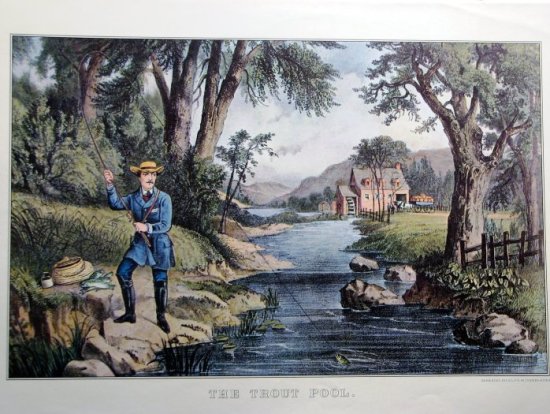
Thursday, April 15. 2010Our seasonal top imageCurrier and Ives' The Trout Pool. The guy is fishing for Brookies. That's all there were in the East, back then. Browns are a European import, and Rainbows are an import from the Western US.
Saturday, April 3. 2010Ichthys on Opening Day
Posted by Gwynnie
in Hunting, Fishing, Dogs, Guns, etc., Our Essays
at
17:57
| Comments (6)
| Trackbacks (0)
Friday, March 12. 2010Virtual Skeet
Tough shooting, but good fun. Let's find out whether our readers can shoot.
Saturday, March 6. 2010Fishing Bamboo #1Re-posted from a couple of years ago - (Trout season around “Fishing Bamboo” is the name of a wonderful book by John Gierach, a veritable fishing curmudgeon of the old school. In reviewing the book, W. D. Wetherell said, “The split bamboo fly rod and the mystique that goes with it is a subject that deserves just the right mix of skepticism and reverence, and John Gierach is just the writer to supply this, in a fascinating book that explains what the excitement is all about.” Yet like many wonderful things of the past, the bamboo rod is close to being on the endangered list. I took one of my late father’s wonderful E.C. Powell rods to Montana to fish the Bighorn (hated it – we were trolling downstream from a boat with the fly being swept ahead of us by the current). As I assembled the rod, the 20ish guide said “It just don’t look right, being yellow.” He had never seen a rod that wasn’t molded from green or brown-dyed synthetic petroleum by-products reverently referred to as “graphite”. A professional fishing guide, on the Bighorn, and he had never seen a bamboo rod. Well, I have to wonder why not, and deal with the conclusions. Those of us who use bamboo are probably using our father’s or grandfather’s rods, because the values of these rods have gone from high to stupid. I lost my mother’s 2½ oz. 7-foot “baby Powell” on a transcontinental flight, and after two years of mourning and being unable even to contemplating fishing, I felt morally obligated to replace it. The 2½ oz. 7-foot Leonard “Fairy Catskill” I found on eBay cost me $3,600, and I fish it often, refusing to be terrified. It’s just Ma’s rod reborn, and it is meant to fish the 7”-9” wild trout we find where I fish in the Sierra Nevada Mountains. The tip, maybe one millimeter thick, is still composed of six long, incredibly slender, patiently-planed pieces of Tonkin cane spliced together, tied with dark red thread and then lacquered. There are precious few people alive today who can replicate or repair such artistry. Orvis still sells bamboo, and there are still some fabulous rodmakers working today, like my friend Jim in Florida, a retired USAF Master Sergeant, who not only makes amazing bamboo rods, he also make all his own machine tools for the bamboo and also the metal fittings. Well, where are the rods? I fear they have fallen into the hands of “collectors”, look-but-don’t-touch people with a lot of money and minimal fishing skills – much like Purdey shotguns. Have you ever seen a Purdey in the field in the US where it can get dinged on stone walls, fall in the mud, and run over by SUVs (except for those fancy-ass Hudson Valley corporate clubs). I have several old bamboo rods and may add one of Jim’s quad rods to my arsenal, and I have some English shotguns, but I follow – and leave the gentle reader with – my partner Tom’s advice. Be sure you can say that you have caught a fish with every rod you own, and that you have taken a bird with every shotgun; only then do you honor the rare skill of the maker. (Image is an old Heddon 7-8 wt. 9' rod, for big fish - salmon and salt-water fishies. I never thought I'd see it, but salt-water fly-fishing has become all the rage these days.)
Posted by Gwynnie
in Hunting, Fishing, Dogs, Guns, etc., Our Essays
at
14:16
| Comments (41)
| Trackbacks (0)
Friday, March 5. 2010Fishes of the Week: The Native Western Trout SpeciesThis is a re-post from guest author Skook: Glaciers and mountain-building have created many distinct species of trout throughout the Pacific drainage. To find them, fish a mountain river, take a boat out on the Pacific, or hike to a desert lake. Rainbow (above) – Silver with black spots and a reddish band along the side. Their native range is the West Coast mountains, though they have been introduced elsewhere in North America and beyond. Redbands are a variant found in the Great Basin, where they have adapted to high summer temperatures. Steelheads are anadromous rainbows that spend parts of their lives in the North Pacific from Kamchatka down to Malibu Creek near Los Angeles. In the Northwest, rainbows and steelhead are the premier game trout of the rivers and coast. (While Rainbows are to be found in the East, these are all transplants or hatchery fish. The native stream trout in the East is the Brook Trout - which is a char.)
Wednesday, March 3. 2010Fish stories
- And Bottlenose Dolphins aren't really fish, but the Japanese in Taji kill 23,000 of them each year. This is not stewardship. - Another fish tale: An Entirely Synthetic Fish: How Rainbow Trout Beguiled America and Overran the World. Monday, March 1. 2010Fishes of the Week: The Eastern Trout Species
It's getting near Opening Day around here, so here's an update on the Salmonidae. For our other pieces on fishing, enter "fishing" in our search space - you will catch some good stuff - along with some random entries. Taxonomy: The family Salmonidae includes a number of cool-water fish subfamilies: trout, salmon, char, grayling, Lake Whitefish, and other less well-known fish. The Brook Trout and Lake Trout are technically members of the Char subfamily of the Salmonidae. Heritage: The aggressive, young-trout-killing Brown Trout is a transplant from Eurasia. The fast-water Rainbow Trout is a transplant from the Pacific watershed. The splendid Brook Trout and the big Lake Trout are the common native game species of the Eastern US, and both are technically Char, not trout per se. At this point, the wonderful game "trout" have been transplanted world-wide, and some have established viable wild populations, as with the trout in Patagonia, where you can even catch New England's Brook Trout today. Anadromy: Most Salmonidae have the capacity, or the preference, to be anadromous - to migrate to salt water until maturity - when they have the opportunity. The Arctic Char, of culinary and cold water fame (anti-freeze in the blood), is anadromous. So is the Steelhead - actually a migratory Rainbow. Salmon are, of course. Sea-going fish grow larger on the rich variety of big-water foods. Interestingly, many land-locked Salmonidae imitate anadromy by entering streams to spawn, and then return to their home fresh-water lakes or just stay put in the streams, if there is enough to eat. The Great Lakes and other large lakes have their own Salmonidae species, such as Lake Whitefish, and Lake Trout which are not found in trout streams. Hatchery fish: When you fish for trout in the East, you are, in all likelihood, catching hatchery fish, not wild, born-in-nature fish. Too many anglers, and not enough habitat, so we pretend we are catching wild fish. Catch-and-release gives your fellow angler a chance, and saves your state government, or your fishing club, money on their hatchery budgets. Still, some wild breeding populations do exist, and fly-fishing with barbless hooks gives every fish a sporting chance to avoid the crushing humiliation of the sportman's net. But I still wonder what would happen if we banned all fresh-water stream fishing for five years. What would we find in our streams? Nothing? Or big, mature breeding trout hunkering under stream banks and fallen logs? We will never know, but I suspect that many of our streams would not support wild trout populations. Other details: - Superb taxonomy website: ITIS Image: Brook Trout, by Denton Sunday, February 28. 2010Eleven Mile RiverLooking forward to fishing season, and hoping Capt. Tom will have some fresh info for us, especially about fly fishing in Yankeeland. In the meantime, I will dig up some of our archival bamboo fishing posts - That's Editor Bird Dog in the distance, happily fishing in the rain on an April Saturday on the Eleven Mile Brook in CT, with a Haney 7'4" quad bamboo, on Beat #4. Plenty of mostly hatchery Brook Trout, all sizes. Which are not trout, as I am regularly reminded. Called trout, look and act like trout, but Brookies are, in fact, a species of char, not trout.
Wednesday, February 24. 2010Hunting buddiesScuppers and Harley on a grouse hunting trip in Maine 7 or 8 years ago, hanging out by the lake that President Eisenhower liked to fish:
Thursday, February 18. 2010Dog du Jour: KuvaszWe know that a Scottie won the Westminster Show, and everybody loves Scotties. I was partial to the Coonhound. My cuz emailed me that he had a show favorite: The Kuvasz. Never heard of them. Big dogs, bred in Hungary to protect livestock. Look kinda like a wolf in sheep's clothing:
Posted by Bird Dog
in Hunting, Fishing, Dogs, Guns, etc., Our Essays
at
11:07
| Comments (5)
| Trackbacks (0)
Wednesday, February 17. 2010Michigan fishing in comfortOver the transom: My raft has a 15,000 lb capacity. The deck is 18ft x 18ft with 12 plastic foam filled dock floats that are 4ft x 4ft by 18 inches high and the gazebo is 10 ft. Hexagon with a table and chairs. Inside, under the table is my trolling motor so I can take it out to my favorite fishing hole. The trolling motor is remote controlled wireless so I can be fishing outside and operate the motor. On the top of the table I have a LOWRANCE Fish-Finder with depth sounding sonar's and temp gauge. I have 2 electric winches with 40 lb. anchors. I have also built in a water pump so I can clean the fish right on the spot. Now I can relax and fish while my wife can sit and relax.
Posted by Gwynnie
in Hunting, Fishing, Dogs, Guns, etc., Our Essays
at
14:57
| Comments (6)
| Trackbacks (0)
Thursday, February 11. 2010Kentucky Elk
Who knew? The restoration of Elk to Kentucky has been a huge success. (Thanks, reader.) Now they need their hunting season, since the predators haven't found them yet. No Cougars or wolves seen in KY lately, alas. Wildcats, yes! A wonderful state, but too far from salt water for me. There used to be forest-dwelling buffalo ("Bison" for purists) throughout Kentucky, Indiana, Missouri, Tennessee, Illinois, Ohio, too. How about trying a restoration of them? I do know that they bust through fences... Wednesday, January 27. 2010Got Game? The best game sauce recipe in the worldThis is an annual re-post. With hunting season coming to a close, it's time to get cooking what we have in the freezer. It all begins with the sauce:
This will be the tastiest sauce base, or sauce, you have ever had in your life, for chicken, game birds, turkey, venison, pork, veal, pasta, ravioli, etc. It's an ideal base for pheasant, chicken, venison or goose bourguignon. It has an earthy richness to it which is remarkable. We like to make a woodcock ravioli with black truffle, and this sauce is essential for that. Gibier refers to mixed game, but we do it with mixed meat too, but not beef, which would overpower the subtler flavors. It is the best use of freezer-burned game and other stuff in the freezer. It's fun to make (but it takes a while), and you can clean out the freezer and the fridge at the same time. I freeze the used carcasses of Thanksgiving turkey, ducks, goose, random deer bones, etc. to use when I make this, once or twice a year, along with freezer-burned chicken, pheasant, etc. You could do this with entirely store-bought stuff if you lack a hunter in the family. The more stuff, the better. You need a 10-12 (or larger) quart stovepot to make this, if you have a lot of stuff to use, but it freezes fine when made. It's good for a few months, at least. Bake in oven until browned (not necessarily cooked-though) your saved carcasses and freezer-burned game meat and meat, especially pork and pork bones are good, and veal bones, (even if they have already been cooked). Yes, you bake the bones too. Do not burn them in the oven. I tend to use freezer-burned venison, pork chops, all my game bird carcasses, venison bones (cracked with a mallet), a bunch of veal bones and veal scraps if I can get them nowadays (it doesn't hurt to hit up the butcher for some stuff for this), turkey carcass, woodcock carcasses, and a pile of chicken wings. Chop this stuff roughly with a cleaver into 3-6" chunks and toss in the pot. Try to crack the bones. Continue reading "Got Game? The best game sauce recipe in the world"
Posted by Bird Dog
in Food and Drink, Hunting, Fishing, Dogs, Guns, etc., Our Essays
at
13:04
| Comments (16)
| Trackback (1)
Sunday, January 17. 2010Rare Recipe du Jour: Woodcock Ravioli
The USA is unusual because wild game meat can not be sold in stores. All "game" meat sold in the US is farm-raised, whether venison, quail, pheasant, duck, or whatever. That is the correct and righteous legacy of the devastating, 12 month/year market hunting of the past which devastated the seemingly endlessly abundant American wildlife populations. There is no bird as special for the table as Woodcock, but you have to shoot them yourself. One way to do justice to this diminutive bird (smaller than the European Woodcock) is a ravioli dish I learned from my Cordon Bleu chef friend. Take a few Woodcock, and cut all of the meat off them - breast, thighs, etc. Chop the meat into roughly 1/2" pieces. Throw in a bowl and mix with a bit of sauteed very finely-chopped shallots and carrots, salt, pepper, a bit of fresh thyme and parsley and a little bit of truffle oil. Take some wonton squares and brush some whisked egg on the edges as glue. Put a teaspoon or two of the mixture inside, then seal the squares tightly to eliminate any air inside, and place carefully into gently boiling water until done. It only takes a few minutes. Serve the raviolis drizzled with somewhat reduced gibier sauce, with a few shavings of black truffle on top. Can't be beat.
Posted by Bird Dog
in Food and Drink, Hunting, Fishing, Dogs, Guns, etc., Our Essays
at
15:49
| Comments (9)
| Trackbacks (0)
Friday, January 15. 2010Dog-friendly travel
How about dog-friendly hotels? There are tons of them, and I am not sure that everyone knows how easy they are to find. I decided just to check those on the I-95 corridor. There is a Pet Friendly Hotels site. Photo is my favorite breed. Friendly? They will knock down strangers just to kiss and lick their faces.
Posted by The Barrister
in Hunting, Fishing, Dogs, Guns, etc., Our Essays
at
11:13
| Comments (15)
| Trackbacks (0)
Thursday, January 7. 2010Surgical Speed Shooting Order this book through Jules, and he will be grateful: Surgical Speed Shooting: How To Achieve High-Speed Marksmanship In A Gunfight.
Posted by The Barrister
in Hunting, Fishing, Dogs, Guns, etc.
at
12:36
| Comment (1)
| Trackbacks (0)
Wednesday, January 6. 2010Rifle du Jour: Savage Model 99
That's a Savage Model 99 chambered for .308. There is always a good selection of Savage 99s at reasonable prices at Gun Broker.com. It's good to be able to purchase firearms through them: it's an online gun show. A 100 year-old lever action hammerless design, still going strong although the manufacturing of this rifle ended in the 1990s. Jon Wolfe says:
Here's the Savage 99 website The Wiki entry has lots of info. Here's a useful short article: GOOD FIRST BIG GAME RIFLES Here's Hawks on A Dozen Top Deer Rifles (he does not include the Model 99 on his list)
Posted by Bird Dog
in Hunting, Fishing, Dogs, Guns, etc., Our Essays
at
11:14
| Comments (10)
| Trackbacks (0)
Friday, January 1. 2010A Sig Carry gun
I never leave home without my carry gun, my keys, my wallet with some cash in it, and my cell. Who would? Update: In response to queries, I now carry a Colt Cobra with which I very much enjoy trying to shoot beer bottles and cans down on the lower 40. Do not mess with me if you see me in downtown Hartford. I have never needed to aim a gun at a person while in civilian clothing, although I have performed a Dick Cheney once or twice in thick woods with birdshot. Most bird hunters have. It's something to be avoided, because it pisses off your pals and makes them reluctant to invite you again.
Posted by The Barrister
in Hunting, Fishing, Dogs, Guns, etc., Our Essays
at
16:42
| Comments (14)
| Trackbacks (0)
Wednesday, December 30. 2009Striper Greetings from SC
Greetings from West Columbia, South Carolina. I've enclosed a link to a very short video of my youngest boy and a striper he caught yesterday on Lake Murray. Very nice looking year/year and a half schoolie. We caught about thirty of these fish in the rip between two islands: Lake Murray is a very interesting fishery. 50,000 acres of water and all kinds of micro-ecologies from amazing pan fish through it's premier striper fishery. 20/25 lb catfish are common and bream, shell cracker, crappie and your garden variety sunfish are in abundance in dinner plate sizes. The striper fishery is incredible - again, larger specimens of this fish are not uncommon in the 30 lb range with the average specimens running in the 15/20 lb class. Lake Murray was built in the late '20s by impounding the Saluda River and its basin at Dreher Shoals a little Northwest of Columbia, SC. At one time, it was the largest earthen dam ever constructed. Water from the dam was used to power hydroelectric turbines for a large part of South Carolina and these turbines are still in use today. Lake Murray also has an interesting military history. The Army Air Force during WWII used the lake's islands as bombing and strafing target practice. Five bombers were lost in the lake, four were recovered at the time for salvage, but the fifth, a somewhat rare B-25C, was lost until it was found in 2003. A salvage effort was launched in late 2004, the plane raised and it is now located at a restoration facility in Montgomery, Alabama. Lake Murray is also famous for its Purple Martin Sanctuary located on Bomb Island (approximately in the middle of the lake). As odd as it may seem, this is a major tourist attraction for the area as thousands of Purple Martins leave in the morning and return in the evening to roost over night. A lot of boaters make an evening of picnics on the water watching the evening return of the Purple Martins to Bomb Island. If you Google up Purple Martins and Bomb Island, you will see some images and an incredible radar image taken of this daily routine. I don't have my pictures of this event - took the wrong laptop with me. Ed. Note: You can read all about the remarkable anadromous and adaptable Striper here.
Posted by Capt. Tom Francis
in Hunting, Fishing, Dogs, Guns, etc., Our Essays
at
11:21
| Comments (2)
| Trackbacks (0)
Tuesday, December 29. 2009Fun with guns
I Like Guns video at Tiger
Posted by The Barrister
in Hunting, Fishing, Dogs, Guns, etc.
at
11:10
| Comment (1)
| Trackbacks (0)
Wednesday, December 23. 2009Another last minute Christmas idea
A best-selling book: Inside of a Dog: What Dogs See, Smell, and Know
Friday, December 18. 2009Pan-seared recipe du jour: DuckLong Island duck or duckling, or any farm duck, is not the same thing as wild duck. Farm ducks, which are basically the Chinese Pekin duck, are much larger and fatter than wild duck. Being grain-fed, they are also less gamey in flavor. (The gaminess and fishiness of wild duck, for me, are wonderful and rare treats.) I am always happy to eat either sort of duck, as long as the meat is red in the middle, the skin is crispy, and there is no darn orange sauce or maraschino cherries anywhere near the food. I agree with Alton Brown that pan-seared quarters of brined duck is the best way to cook the bird. He steams his first to extract the delicious fat, but that is for fat farm birds. Do not do that with wild duck. When I want duck fat, I buy it at the store. Duck is good with sauteed fresh figs or other fruits and a gibier sauce. Here's Alton cooking a Long Island duck for his Dad. Interesting, and educational:
Posted by Bird Dog
in Food and Drink, Hunting, Fishing, Dogs, Guns, etc., Our Essays
at
13:17
| Comments (6)
| Trackbacks (0)
Monday, December 14. 2009A few of Maggie's friendsFrom a Maggie's pal, seeking intertube fame and immortality no doubt. Nice dogs, though - including "Maggie": Went preserve hunting on Saturday in Delaware. We killed 16 of the 20 pheasants
Friday, December 11. 2009Name that breedA pal stopped by for a beer with his pup the other day after work. A sweet, gentle puppy. Can you name the breed?
Thursday, December 10. 2009Found one
Showing a bit of blaze isn't just for hunters - it makes good precautionary sense when hiking in the back woods during deer season. Our rule is to never hike during deer season when wearing brownish clothing and antlers. Wednesday, December 9. 2009Waxed cotton vs. Gore-texI guess this is Part 2 or 3 of our Outerwear Christmas ideas for guys (and gals) mini-series -
Trouble is that waxed cotton jackets, wellies, a dog, and a nice gun look so natural together. It's about fashion to some extent: how many Americans wear their Barbour when brush-busting for grouse or mucking the stall vs. the number that wear theirs to the hardware store, the mall, and their kids' soccer games? I own a Lewis Creek and an old Browning waxed jacket, but I have plenty of Gore-tex parkas and field gear for various purposes: camo, blaze, parkas, outer-jackets, etc. Gore-tex hunting brush pants, too - insulated and uninsulated (insulated hunting trousers was a waste of $ - all you need is winter underwear of whatever weight you select for the weather of the day). Despite all the above, I'll just address waxed cotton here despite its impractibility. Gore-tex is great stuff, but it's boring. Image is the Barbour Beaufort, at Cabelas. Here's the main Barbour site, with all of their stuff. Orvis has plenty of men's and women's Barbour stuff. Lewis Creek. Good stuff, distributed from VT but made in Scotland. LL Bean is doing waxed cotton too. For true heavy-duty waterproof outerwear, Filson's tin cloth is the ultimate. That waxed canvas is so tough that it stands up by itself after you take it off. In fact, if you died standing in a goose blind or in the woods the tincloth jacket and tincloth trousers would probably still hold you up straight like a scarecrow until a strong winter storm blew you over. Their "shelter cloth" is lighter weight. I have some of the stuff. Its durability:comfort ratio is high. Feels like medieval armor before it warms up and softens a bit. Remember: Always check Sierra Trading Post first for good deals. Tuesday, December 8. 2009Dog du jour: Clumber Spaniel
At brunch on Sunday after church, a friend's wife told me how she managed to find a breeder with a fresh litter of prize Clumber Spaniel pups. She sent my pal off to bring one home two weeks ago. He came home with two. "I figured the pup would need a playmate." Liar. I know what happened: he couldn't decide which of the ones rushing to lick his hand, so he took both. She told me his little dog-buying trip cost them close to $6000. Last time I went to look at a litter of pups, I would have bought the whole darn litter of 8 unless wife and daughter had been present to lend some sanity to my puppy-weakened condition and limited me to one. Note to self: Stay away from puppies. Lead me not into temptation. Here's a Clumber Spaniel site. Yes, they do hunt, but I've never seen one in the field.
Posted by Bird Dog
in Hunting, Fishing, Dogs, Guns, etc., Our Essays
at
15:41
| Comments (12)
| Trackbacks (0)
Saturday, December 5. 2009Dog furniture
Some people like to crate their dogs at home, and some do not. Furthermore, some dogs love their crates and some hate to feel confined. We tended to crate our previous dog, but not our current pup. I never minded the look of a dog crate or two in a family room, but Orvis has some that are more functional for people - and which look more like furniture. Info for the one on the left, and on the right. Each comes in three sizes.
Posted by Bird Dog
in Hunting, Fishing, Dogs, Guns, etc., Our Essays
at
12:42
| Comments (2)
| Trackbacks (0)
Thursday, December 3. 2009Do not wait for global warming: Christmas warmth ideas for red-neck Yankees
These things are made for outdoor work. You often need to buy them one size up for layering underneath, depending on your personal size range. They look better and feel softer with some dirt and grease on them, and a small tear or two. If you want to go a bit upscale from that sort of thing, these are always acceptable (even though they are from LL Bean). They are also made with quilted linings like this for colder weather. Variants on the theme of overshirts and "shirt-jacs" is this Woolrich wool classic:
A zippered, Windstopper-lined LL Bean Maine Guide wool jacket:
Carhartt's basic canvas, flannel-lined work shirt:
Lastly, Caribou Creek quilt-lined, at Cabelas:
Disclosure: Four dump trucks of wool and cotton overshirts were dumped in our Maggie's Farm driveway, blocking all tractor traffic and causing all sorts of problems with the hogs, in exchange for the above post. Please, everybody - Stop giving us free stuff and money! We don't want it! We have enough money and stuff, and it costs money, time, and effort to get rid of excess stuff. Ever try to take a Filson wool cape shirt off a dirty ole 800 lb. hawg who wants to put on airs? Dang. Tuesday, December 1. 2009Christmas List ideas
These fine-looking fancy jackets are obviously not meant for heavy brush-busting, chain-sawing, snow plowing, duck hunting, or ditch-digging. (Waxed jackets are a separate topic.) Top one is Beretta's Gun Six Coat. The middle one is Orvis' Waterproof Loden Wool Shooting Coat. The bottom one is Orvis' Estate Tweed Gore-Tex Jacket.
Friday, November 27. 2009Ban Fox Hunting Now!Sunday, November 22. 2009Best gun
A pity I prefer my antique 20 ga double-triggered s/s for comfort and feel, but the dang thing don't shoot straight at wacky birds! Can you name my gun? It has beautiful oiled walnut to which my snap does not do justice:
Posted by The Barrister
in Hunting, Fishing, Dogs, Guns, etc.
at
11:47
| Comments (17)
| Trackbacks (0)
Friday, November 20. 2009Bird of the Week: The Woodcock, plus remorse and a classic hunting bookSomewhere in either Tolstoy or Dostoevsky there is a comment about the remorse of the hunter when holding a Woodcock in hand. You have noticed that our head image on Maggie's now is Woodcock hunting. John Stuart Skinner in his classic 1883 The Dog and the Sportsman put it this way:
Skinner's charming section on the Woodcock, written back before hunting seasons were instituted, is here.
Like all shore birds, they are ground-dwellers and ground nesters, and do not perch. Because of their camoflage, their habit of feeding and being active at dawn and dusk, and their trick of freezing when approached, they are not commonly seen except in early spring, when the males perform their remarkable aerial mating dance at dusk. Their long bills are hinged near the tip for capturing earthworms which they probe for in the soil and forest litter. They are thus necessarily migratory, to the Southern US. A few other details: Woodock is the only "shorebird" which is a legal game bird in the US today. They are not widely hunted, but they make excellent sport and their liver-flavored breasts are a rare gourmet treat. The French especially favor the brains, on toothpicks. People who don't like to eat them should not hunt them. Their habitat overlap with the Ruffed Grouse makes a typical mixed bag for Ruffie hunters. Because of their small size and cute appearance, many hunters will admit a mingled sense of dismay and pleasure when they bag a Woodcock. Unlike grouse, they cannot be hunted without dogs, because you would never find them. A decline in Woodcock numbers has been noted over recent decades, which may be due to habitat loss, but the cause is not certain. They are fond of overgrown fields and orchards, wetland edges, and transitional young woodlands, especially birch and aspen. The European Woodcock looks like ours, but is larger. Woodcock's heads are oddly-arranged: their brains are upside-down, and their ears are in front of their huge eyes. More about the Woodcock here. The Ruffed Grouse Society supports research on Woodcock along with grouse.
Tuesday, November 17. 2009Glove sizing, plus shooting gloves And I have a mild case of Raynaud's. Glovemakers vary in what they mean by L,M, S, etc. Here's a great way to determine your numerical glove size when ordering online. Leather, of course, tends to stretch a bit with use. Sierra Trading Post almost always has nice shooting gloves at a meaningful discount. Those are for cool - not frigid - weather. Not just for shooting either - good cool-weather all-purpose gloves. The right gloves for hunting grouse in the snow or ducks in the sleet at 10 degrees F is another topic. The perfect gloves for those things do not exist, as best I have been able to determine. Heavy waterproof gloves, obviously, do not fit rapidly and easily inside a trigger guard, and if you are using a double-triggered old s/s, it's really a problem. Ideas are welcome. I wonder what the Army uses in Afghanistan in the winter. Maybe things like this.
Wednesday, November 4. 2009Pediatric Obama Epidemic
Have barf bag ready. Government teachers at government schools, paid for by us. Friday, October 30. 2009Hunted yet this fall?
Tell us what hunting you have done this fall (not including pen-raised birds or half-trained farm Mallards - that isn't hunting - that is shooting. Not that there is anything wrong with it.)
Posted by Bird Dog
in Hunting, Fishing, Dogs, Guns, etc., Our Essays
at
14:12
| Comments (14)
| Trackbacks (0)
Wednesday, October 28. 2009The final "Winter in New England" Post #8: Do you need snow/mud tires?
We all must adapt! With Global Cooling hastening our certain death and doom by freezing to death, we offer this final post in our annual Winter in New England series. God willing and if we survive Climate Change, we will extend this series next fall with some new additions. The prior posts in this annual series were: Winter in New England, Part 1: Lamp and Lantern Season Winter in New England #2: Keeping the humidor humid in winter Winter in New England, #3: Jump Starters Winter in New England #4: Wood and Pellet Stoves Winter in New England #5: Layers Winter in New England #6: Boots and Wellies Winter in New England #7: Hand and Foot Warmers Let's face it: 4 WD is is for petite blond yuppie wives who do not know how to drive in snow and mud while chatting on their cell - and for hunters who like to take vehicles to gnarly places. There's a cheap solution. Snow and mud tires are called "Winter tires" nowadays. They are made of a softer rubber (so as to provide better suppleness in cold temperatures), which is why they don't last as long as regular tires. That's the reason to put them on in November and to take them off in March or April (around here, anyway). At that rate, they will last 3-4 seasons at the minimum. Important safety considerations with winter tires: Always put them on all 4 wheels and never replace just one: replace all 4 at the same time. Decent snow tires will turn your old Chevette into the rough equivalent of a 4 WD. But how do you know whether you need them? In my opinion, if you need them, you will know it - but here's a piece on the subject. (fixed) With global cooling picking up its pace, everybody may need them soon. 4 WD is good but, where you need them, winter tires are as good or better.
(Page 1 of 6, totaling 295 entries)
» next page
|