We are a commune of inquiring, skeptical, politically centrist, capitalist, anglophile, traditionalist New England Yankee humans, humanoids, and animals with many interests beyond and above politics. Each of us has had a high-school education (or GED), but all had ADD so didn't pay attention very well, especially the dogs. Each one of us does "try my best to be just like I am," and none of us enjoys working for others, including for Maggie, from whom we receive neither a nickel nor a dime. Freedom from nags, cranks, government, do-gooders, control-freaks and idiots is all that we ask for.
There are a few Italian pasta dishes that I am very fond of. One is the old reliable spaghetti - best made with spaghettini, I feel - with garlic and oil, with parsley on top. But the best is Pappardelle al Funghi.
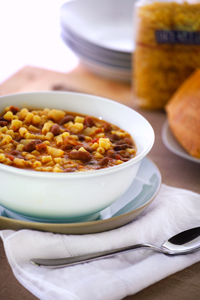
The fungus, of course, has to be Porcini, either fresh if you can get it (and afford it), or dried. Dried is almost better, because you use the soaking water in the mix, and the flavor of the dried is more intense. I cannot find the exact recipe that I make on the internet, but it's something like this.
However, I don' know why it needs all that wine and chicken broth. Too soupy. Also, no Parmesan - no reason to add another flavor to distract from the earthy richness of the Porcini.
As you know, you never serve a sauce on top of pasta - you toss the pasta in the hot pan with the sauce. Photo below looks like it's made with fresh porcinis not cut quite into 2" pieces, and somebody forgot to garnish it with chopped parsley and some pepper. Otherwise...
Many would claim that Sicily is not really part of Italy (they even speak Sicilian, not Roman Italian). However, the tiny country of Italy contains many regions with separate cultures, genetics (northern Italy is full of lovely blondes), foods, languages - parts of northern Italy speak German or French or Veneto - and accents, etc. that it seems like an artificial nation. Well, it is.
Languages of Italy. Many Italians speak a regional language or dialect, maybe plus the official Roman Italian, especially if they are urban.
The nation turned 150 years old in 2011, so it is still young and culturally divided.
Anyway, this post was meant to offer a sample of classic Sicilian cooking. We had something very much like this Swordfish outside Agrigento two years ago. However, the filet of swordfish, sliced horizonally, was neither pounded nor rolled - just stuffed with the herbs and pignolis, with the other slice laid on top before baking.
It was topped with a wine and white raisin sauce and served on a bed of - you guessed it - Italian-style mashed potatoes (ie with oil not butter, plus garlic). That's Sicilian cooking.
Sicily is on our list of places to spend more time in the future. Due to its relative poverty and its corruption (from what I have read, it's still basically run by the Cosa Nostra, and what we would term "sociopathy"in the USA is normal there), it hasn't changed much in the past century.
If you go, don't forget the Cannolis (they are a Sicilian dessert).
Photo on the right is a couple of charming Sicilian gals
Tried a good Italian restaurant the other day, and I decided to see what they could do with a simple Braciola - Braciole - (made with flank steak in this case) with a Barolo sauce.
Readers know that I am an obnoxious Italian food snob, but it's not my fault. I never ate Italian growing up, so I never heard of spaghetti and meatballs. Between Mrs. BD's cooking, and many trips to Italia, the two things often thought of as Italian in the US that I can do without are tomato sauce (this good place had no tomato sauces on the menu), and pasta (mostly, with rare exceptions for clam or porcini, or near-starvation with nothing else in the pantry). Another tip: never order a pizza in Italy. Terrible stuff. Only Americans know how to make good pizzas. Furthermore, you can get a better bruschetta in America than the lame, stingy ones you get in Italy.
Italian red wine sauces for meat are simple: briefly sautee a glass of good wine, a hunk of butter, salt, and a little flour to thicken. In Sicily, they add some raisins to it and a little sugar. That is pleasant.
They served the Braciola on a bed of soft, creamy polenta with a splash of oil on it. I think there was a touch of parmesan in the polenta. These are the simplest of foods. For me, that's Italian cooking. You cook that Braciola until it almost falls apart.
At our house, we make polenta as a primi, firm and knife-cuttable with a sauce on top - black truffle or Porcini - but this saucy polenta was a good choice by the chef. Soft polenta. My chef friend disparages firm polenta, but I think it's fine for the right purpose and it's real Italian - thanks to the American Indians who genetically-engineered corn (maize, to you in Yorba Linda Europe).
Like Italian potatoes, tomatoes, squash, polenta (corn meal) were all recent imported products from the New World, and their risotto from Asia. Pasta? It's a topic of debate.
Feel free to tell me how much you like spaghetti and meatballs, and soggy penne with red sauce!
A fine old New York carnivore's delight, on W. 36th St. since 1885. Actually, it was a club before that, back when Herald Square was NYC's theater district.
Keen's is famous for their mutton chops (photo). How do you like your mutton done? (don't say "Dressed as lamb").
I'm getting hungry. Need to get back there soon. Remember when manly pubs were termed "watering holes" and hearty meat-eaters were termed "trenchermen"? The good old days, before wimpy metrosexual scaredy-cat men, and before we had a President who eats arugula. (Confession: I like arugula, and dandelion greens too, but I could happily live the rest of my life without salad or vegetables.)
Everybody in the NY metropolitan area has his own favorite steakhouse, and NYC has tons of them. It's a guy thing. Wives prefer their favorite Italian or French bistros, and those are fine with me too.
Dining in a clam shack can be cheaper, and far better, than eating at home. I love rickety little clam shacks. This one has a more extensive menu than the usual. Place is famous for the best Lobster Rolls in the world (in their opinion).
Why Sea Scallops cost more than Bay Scallops, these day, is a puzzle to me. The little Bay Scallops are much tastier, but the big Sea Scallops make a better presentation, I guess. Lots of people just don't know their seafood. I don't know much, but I think I know my seafood.
Beurre Blanc is for seafood. Dynamite simple sauce for baked cod, haddock, scrod, or scallops. The trick seems to be the (unnecessary for flavor, but useful for the process) dollop of heavy cream in the saucepan.
Our hunting friends all must have pheasants in the freezer at this time of the year.
This may be my favorite Pheasant recipe: Pheasant Braised with Red Cabbage and Apple. I plan to make some soon. A simple dish, but a treat for dinner guests. The meat must be pink in the middle but the skin crispy. Forget the legs - pheasant legs can only be consumed in a confit.
I like to throw a splash of reduced gibier sauce on top, to finish it off. A Pinot Noir is a good idea too - a white wine is always wrong with poultry and/or game birds.
If you have a favorite Pheasant recipe, let us know.
It's generally a good idea not to over-train one's palate, if only because life becomes too expensive if you do. Fine wine, for example, or fine dining and fine ceegars.
I did have an excellent cup of after-dinner coffee recently, and was advised that it was Royal Kona. "Not Kona - Royal Kona." They made it with a French Press. Coarse grind only, for the French Press.
I drink coffee black and hot. Chef told me that Royal Kona is the best coffee in the world, and Jamaican Blue Mountain is second. I see that they can be purchased online.
I'm not particular about coffee, but that was damn good, with just the right touch of bitterness.
What coffees do our readers drink? Our sponsor's Dunkin? Maxwell House? Whatever the minimart has in the pot? Royal Kona? Or, God forbid, Starbucks? (I know we have some closet Starbucks fans out there.)
When is enough pleasure and instant gratification enough?
Oh, maybe never, I hear my readers thinking.
I put the word "addiction" in quotes because I am not referring to physiological addictions such as to narcotics or alcohol, but to the pop culture use of the word, as applied to chocolate, food, sex, money, power, buying, etc. The casual use of the term, of course, refers to the difficulty in stopping the behavior when it doesn't make sense.
Some people are studying the brain to try to understand satiety. Some, interested in overweight, are studying foods. I think they are barking up the wrong tree (Yankees might not realize that that is a reference to coon hunting with coon hounds).
I believe that most of these "addictions" are more subcultural and psychological than physiological. Returning to the topic of food, the well-respected scientific journal Elle points this out in Satisfaction Guaranteed:
As a child, were you encouraged to clean your plate and then go back for seconds? If so, you probably didn’t grow up in France, where children are taught to savor the feeling of longing, or envie, for their next course (just think of the cheese!). Our differing notions of satisfaction were examined in a 2006 study of 133 Parisians and 145 Chicagoans published in the journal Obesity. While the French paid attention to an internal cue, the feeling of fullness, the Windy City-ers relied on the external: when their plate was empty; when their companion had finished eating; or when—quelle horreur!—the credits started to roll on the TV show they were watching.
Many Americans ignore the body’s subtler signals of hunger and fullness, hearing only the clanging gong at each end of the pendulum—Starving! Stuffed!—and rarely pausing to enjoy the much more pleasant midpoint: Ahhh, satisfied.
Some subcultures believe in big eating, some in savoring, some in minimalist eating, and, for some, food is just not a central part of life at all - Northern Europeans, for example. I was raised, for example, to learn that a lady always eats slowly, and never finishes the food on her plate. Not in public, anyway. It's not considered ladylike.
Always surprising to me how many amateur cooks have no clue about how to handle knives in the kitchen. Plenty of knife skill vids here. One basic example:
Ever seen the TV show? I hadn't, but a chef friend who loves the show advised me to check out the YouTubes. It is entertaining and educational. Chef Gordon Ramsey goes into messed-up restaurants and advises them on how to improve.
You'll never want to go to a mid-range restaurant again to eat their thawed crap. Plenty of Ramsey's job seems to be family therapy. It's a study of excuses, blaming, and scapegoating. The family interactions in the Italian restaurants are hilariously hostile. A sample (lots more fun ones on YouTube):
Here's how we keep it simple and organized in the BD household: We store the Christmas stuff in chests of drawers in the living room. Nothing to lug up and down, no boxes, etc.
Another good trick: throw your tree lights in the garbage, and buy new ones each year. Something strange happens to them during a year's storage. Not really worth saving, between the untangling and the dead bulbs.
Our pal Gwynnie makes it even simpler: he has his fake tree pre-wired, and just drags it up from the basement. I am not ready for that level of decadence. Sheesh. Why not just keep the ornaments on it too, and lower it on a wire from a niche in the attic, then spray Balsam fragrance on it? Just email me, Gwynnie, and I'll give you a hand. I like Christmas trees.
We had our family Christmas last night. The kids will be away, all over the planet (Vietnam then Czecho, Birmingham Alabama, etc) on the 25th. We had Lobster hors d'oevres, Butternut Squash soup with my special herb and parmesan crouton on top, Italian pork loin with bay in wine vinegar, roast taters, beets, Brussel Sprouts in oil, and Christmas Tree Cake plus a mountain of Italian pastries ("Don't forget the cannolis"). All with either champagne, or Martinelli's for the teetotalers.
We're planning our little neighborhood Christmas Eve light supper before church, as we always do. Cocktails and Eggnog, poached salmon with dill and yoghurt sauce - then run off to church to sing carols. Nice. I have always felt that Christmas Eve with family, neighbors, and friends is more special than Christmas day. It's like anticipation of a birth. However, with Christmas on Sunday this year, I think we'll go to church then too. Why not? Church always does me good.
Off to the Big City now for a first delivered Christmas present - The Voices of Ascension at the Metropolitan Museum with dinner after with my in-laws (we focus on events and experiences - not stuff - for Christmas treats. Feeding the soul is how I think of these things.)
I buy no things, or almost none. Cool experiences last forever, but stuff is just stuff that takes up space, and I have enuf guns and neckties.) Man, did I get some good, fun tix for this holiday season including some Met Museum Christmas singing tix, some Met Opera Butterfly tix, ballet and dance tix, etc. for the kiddies. There is nothing better than dinner and tix in NYC for memorable Christmas season treats. No NYCB Nutcracker - seen that enough times. Once is wonderful but, like magic, once is enough. OK, maybe twice. Nobody does it better...
Pic is a relaxed Christmas Dog. I need to get a good pic of the BD daughter's pup too. We always pretend to detest tiny dogs, but you cannot help but love them once you meet and get to know them. These little things just crack you up. I just worry that my pup will bite its head off in playfulness.
It ain't over 'til the fat lady sings. Tough to find a 15 year-old Butterfly, so they don't even try:
From my doc and from my reading, I think it is fairly well-established that total cholesterol levels have little to do with cardiovascular disease, but perhaps LDLs do (LDL bad, HDL good, supposedly, and all more heavily genetically-determined than dietarily).
Dietary LDL may or may not have a meaningful impact on cardiovascular disease. For what it's worth, LDLs are found in poultry (even lean poultry skinned), all dairy, fish, shellfish, and red meat. Docs like to recommend salmon because it helps HDLs. Heck, it's all theoretical, but I do like salmon (with the right LDL-laden sauce, of course).
In my view, obsessing about food is neurotic, and it's Christmastime too. Who would go to a party where they served "healthy" crap? Not me. Just take your damn Lipitor, skip the carbs, hope for the best, and live it up.
Eggnog is certainly evil, but I do not know a doc at my club who will turn it down. We make it with Wild Turkey bourbon, fluffed eggwhites floating on the top, with tons of freshly-grated nutmeg abundantly on top of that.
My family has traditionally made it a little too strong, but without some booze who would want to drink pre-cooked scrambled eggs? It's all about the fresh nutmeg.
What are our readers' favorite Eggnog concoctions?
Readers may not have heard much about Heritage Turkeys. There have been many breeds of farm turkeys over the years, but today the bland Broad-Breasted White breed is the mass market turkey.
Heritage Turkeys are genetically closer to their wild ancestors, have far more flavor, and run to smaller sizes. Their meat is redder than that of the Broad Breasted White. They are growing in popularity because they do not taste like cardboard. In fact, their flavor is similar to Wild Turkey.
It's like the difference between a supermarket tomato and a home-grown variety.
You can buy Heritage Turkeys online at Dean & DeLuca or D'Artagnan. Some Whole Foods have them, but I won't go to Whole Foods, due to a Whole Foods allergy.
Wow. I just found out that D'Artagnan even sells Free-Range Wild Turkeys. Man, that saves a lot of otherwise-wasted time sitting in the woods.
These birds cost a little more, but they are hardly the same animal as the supermarket Broad-Breasted White. They taste like a game bird.
I had that once as stuffing in boned quail, but it would be perfect for any bird. Reminds me that, years ago, a friend made us boned squab stuffed with squab liver and sage (he raised his own squab). That was tasty too. I see that D'Artagnan (thanks for the big bucks, D'Artagnan) sells boned Coturnix quail and boned squab. I suggest trying them sometime for a special feast.
Speaking of liver, how about Italian liver sauce. It's great stuff, a classic Italian pasta. I'd like some right now. Don't use ham, though. Use pancetta or proscuitto. Bacon is too intense for the purpose.
It's White Truffle season right now (Oct-early December) in Italy. Black Italian truffles are often jarred, but the fresh Italian White Truffle is "the diamond of the kitchen" and is only obtained fresh.
At $300/oz., they ain't cheap, but you shave them into paper-thin flakes with a truffle-shaver so just one truffle goes a long way in making ordinary things into something miraculous. One is good for many meals. That incredible funky, earthy fragrance is the thing. The rule is that you never cook truffle: only add it after the cooking. D'Artagnan has them now, until they run out.
My very best truffle experience was Woodock Ravioli in jus gibier, with shaved black truffle on top. Perhaps my best taste experience in my life. My chef pal and occasional hunting buddy made it for us, with Woodcock he had shot. (Non-American readers may not know that wild game cannot be sold commercially in the US. You have to fetch it yourself.)
Some friends treated us to dinner last Weds. night at their favorite Italian restaurant because they were having a special White Truffle Night there. We chose the Carpaccio with Truffle, the Truffle Risotto, and a wood-grilled Tuscan Steak on a bed of Truffled Potato. That's Italian! Not many places I know where you can get a real Tuscan steak. It's not bland like an American or Argentinian corn-fed steak, and it's grilled with Italian Bay.
They even had a White Truffle Gelato, but we passed on that.
I commented that, if I were eaten by a tiger on my way to the car, he would be pleased because I was White Truffle-infused.
Most of the time, when we want a truffle flavor, I just use truffle oil. It comes in either White or Black, and it is wonderful stuff. D'artagnan sells that, too. As with fresh truffle, you add truffle oil after cooking.
I'm going to make up a nice big venison stew to go along with the turkeys this year. I have a few nice shoulders and loins shrink-wrapped in the freezer. Something sort of like this. I will make a venison bone stock for it instead of a veal stock but I will make it with the magical Porcinis.
Best to make a stew a day or two ahead. Better that way.
Do my friends shoot does around here? Darn right they do. Bow-hunting, usually. It's about the meat. Trophies are silly. Where ya gonna put them? We hang the deer for a week or two in the garage, and butcher them ourselves. In parts of New England, White Tails are almost pests. Many areas, no limits on does.
Contemplating oyster stuffing for the oven turkey this year. Seems like a bit of a waste of good oysters, though. I noticed that the Brits sometimes put Parmesan in their bird stuffings. Hmmm. I dunno. Best bird stuffing I have ever eaten had chunks of foie gras in it. Great. I have done cornbread/chestnut/sausage/apple stuffing too long, and got tired of it. Plus it's a pain in the neck to make, chopping all that stuff like a prep cook.
This is my Mom's Thanksgiving and Christmas recipe:
4 lbs. Yukon Gold potatoes, or whatever you like 8 ounces sour cream 1 stick butter 2 ounces chopped fresh chives (one bunch) 1/2 cup heavy cream Salt and pepper
1. Boil potatoes (peeled or unpeeled - I prefer peeled) in water till they're tender (when you can stick a fork in and it comes right out). 2. Drain and let the steam evaporate off, then cut them up. 3. Mix in the ingredients and cut or mash to preferred consistency. (I prefer them casually mashed and heavily lumpy - but I do understand that the Irish expect them to be creamy, and that a single lump is the shameful sign of an incompetent wife.) 4. Season with salt and pepper.
Serve, if you must, with a side of steak, roast beef, turkey, pork chops, lamb chops, or roast chicken, and daintily drizzle a reduced jus of the meat on top of your potato piece de resistance.
It's close to being the perfect food, containing pretty much all you need to survive. How the Potato Changed the World - Brought to Europe from the New World by Spanish explorers, the lowly potato gave rise to modern industrial agriculture.
What is "lowly" about the sacred Mashed Potato? asks I. We only grow the pre-mashed varieties at my house, genetically-modified to contain the butter, salt, and cream genes.
The premium varieties of potato, of course, come with a thick rare rib-eye on the side.
(It's remarkable to consider all of the things from the New World which changed the Old World: corn - maize, potato, tomato, syphilis, squash, etc.)
Earlier this year, my son came home from school and asked me how hard it was to brew beer. This was not a surprising question from a boy who is 17. I still asked him why he wanted to know. His response was related to school (shocking). He said his Chemistry teacher brewed beer. I thought for a moment, and pointed out that cooking was a form of chemistry, so brewing seemed a natural extension.
At that point I mentioned a brew kit my brother had purchased for my birthday many years ago. It languished in an apartment closet until we moved to our house, and I never utilized it It was gone, but I asked would he be interested in learning to brew?
The answer was robustly affirmative, and we began to look into the purchase of a brew kit.
If you have the desire, you can build your own brew kit for about $35. Two 6 gallon Home Depot buckets, a siphon, an airlock, some washers and a small plastic spigot and you're all set to build the kit on your own. The spigot, washers and airlock can all be purchased online. You'll need lids for the Home Depot buckets. You'll need drills to attach the spigot and the airlock. It will take a little time and effort, but would save a little cash. The alternative is to spend about $100, buy the kit ready made along with all the ingredients for your first batch of brew. I opted for the expensive, easier, route.
I think we're gonna throw a little Oktoberfest party this year.
Cheap and easy: Get a pile of bratwurst, weisswurst, cole slaw, sauerkraut, applesauce, German mustard, German potato salad, and German pretzels at Costco.
Split the wursts and toss them on the charcoal. Boil some of the weisswurst, and grill some of them. Maybe cook up a pile of potato pancakes.
A random selection of German beers - definitely some weissbrau - and maybe some German wine. German chocolate cake too.
After a few brews, get everybody to do the Chicken Dance.
We posted about Tarte Tatin last week, and there is no need to post about Apple Pie because everybody makes it the way their Mom did. Here are more favorite apple desserts, all quick and easy to make (except for the Apple Tart), and all as American as Sarah Palin (except for the Apple Tart):
Apple Brown Betty (a classic American colonial dessert - a "betty" is a pudding)
Apple Cobbler (I think it's better with a few cranberries added)
Apple Crisp (a Dr. Bliss standard, with ice cream)
I also like to make Apple Pancakes for breakfast. I just throw thin slices into the batter. A good pancake combo is some apple and a handful of cranberries. (Every fall I throw a dozen or so bags of cranberries in the freezer. They seem to last 10 months easily without any deterioration.)
Our Editor tells me his family refers to all of these apple desserts generically as "Upside-down Apple Town Dowdy Betty Bow Wow," and reminds our readers that, in Yankeeland, Apple Pie is traditionally for breakfast, not for dessert.
It's the peak of apple season in Yankeeland, and the best use for apples is Apple Pie and Tarte Tatin, which is sort of a semi-burned upside-down apple pie.
The Tarte Tatin was supposedly invented by mistake. I have tried to make them many times, but I can never get the hard crispy caramelization on the apples that I seek: I just get a browned upside-down apple pie - a gooey mush that sticks to the pan and makes for a mess of a presentation (but tastes good anyway).
Hard apples - not cooking apples, high heat and an iron skillet seem to be important. Some people seem to have no trouble getting it right, but I never do.
Here's a recipe. If you can make it right, it ain't too terribly bad with a scoop of homemade vanilla ice cream on the side.
Here's how we cook corn on the cob: After removing the most loose outer husk, we soak the ears in cold water for an hour or so with husks on and silk still present, then toss them on the grill, turning regularly for roughtly 15 minutes.
They steam and char a little. Some of the husk will char a bit, and most of the silk will burn off. That's good.
Peel and eat. For me, no butter, no salt on it. Tastes good the cave man way.
Among the people we tend to dine with, nobody ever orders a dessert.
I am one to enjoy good stinky cheeses with a sliced pear after a dinner, or maybe a tiny bowl of fruit with some creme fraiche, but if nobody is ordering anything except coffee, you hate to be the only one still greedily munching.
Dessert seems to have become a special treat in America, only for special occasions. Nobody wants to act like, or look like, a pig at the trough.
"Red meat and gin" was her rallying cry when the food world's puritans dared to promise long life through nervous nutrition; she scorned grilled vegetables as "burnt and undercooked at the same time". When asked to describe her guilty pleasures [...] she was sure to respond with her usual cheerful defiance, "I have no guilt".
The other day I went into my favorite Mexican restaurant, favorite because it doesn't serve the usual Americanized border food of just tacos and burritos but real(er) Mexican food. I had the goat meat soup, lifting with my hands the flesh covered bones to chew on. Mexican chicken soup is particularly tasty, so I suggested to the owner adding chicken feet to nibble on. He replied that it was also a favorite of his, we both remembering a restaurant in Ensenada that served it and was always packed with locals and foreigners (like my father and me, who like other poor people in our youth made good use of every part of the chicken), but has been displaced by tourist food for the nearby cruise ship port.
There's a post that is circulating that humorously and realistically describes the staples of immigrant Jewish foods. I grew up on them all, and delight when I make some of them or rarely find a restaurant that gets one right. My boys dig in and ask why they haven't had more of this. I joke that McDonalds is not named McDonaldwitz. Many complain that such foods are cardiac arresters. I just finished a series of extensive heart tests, the cardiologist surprised that my heart is much younger than I am.
Lean cuts of beef, like top round and flank steak (London Broil), are not worth grilling, and should not be grilled, without marinating them overnight first. Cooks say 10 hours at bare minimum. Otherwise, these dense, wood-like cuts are like chewing gum when grilled rare, and like leather when overcooked.
In other words, something you could easily choke on, requiring an annoying Heimlich Maneuver.
They have to be marinated in enough acid - vinegar or citrus -to loosen up the meat. Some alcohol - wine or beer - helps in addition to the vinegar. Many people seem to like to simply marinate these cuts overnight in pre-mixed Italian dressing. (I use plastic garbage bags for marinating things in.)
Even with a good 20 hours of marinating, London Broil needs to be sliced thin after grilling.
I do not care for vodka in any form other than in a Bloody Mary or its variants, no matter what our team member Opie says about Grey Goose: I think it's just ethanol with a twist. (To me, a vodka Martini is only suited for auto fuel for the sanctimonious feel-gooders.)
At Maggie's Farm, we are feel-gooders of the other variety. While it's not a strictly holiday drink, I seem to only have Bloody Marys around this time of year. Besides Irish Coffee, it's the only drink a proper gent can have before noon without looking like a drunk. (Coors Lite for breakfast doesn't count as alcohol.)
There are about a thousand different Bloody Mary recipes. Here's an interesting one. I used to have our wonderful Connecticut Yankee neighbor William F. Buckley Jr's recipe, which included canned beef broth or consomme and sounded like a complete wholesome meal in a glass - protein, vegetables, roughage (the celery stick) and booze - but I can't find it. (Thanks, reader. You remind me that some folks call that a Bloody Bull, but I'd still like to find his recipe - it has obviously worked well for him.)
The Bloody Caesar (or plain "Caesar"), I learned recently, is the most popular mixed drink in Canada. It must be all that clam broth that makes Canadians so "nice." It could not be more simple, because the magic is in the magical Mott's Clamato. Rimming the glass with some lime and salt is a delicious touch and also wards off the dread Scurvy. I like the Spicy Clamato more than the regular. Here's the history of Clamato - one of Canada's great contributions to civilization, second only to the Labrador Retriever.
On most days, I'd take the Caesar over the Mary or the Bull. We olde Cape Codders cannot get away from that clam broth, which was Mother's milk to us ever since the kind Indians taught our ancestors how to dig the tasty quahogs.
Addendum: Opie doesn't want our readers to forget the Bloody Maria
Fried Squash Blossoms are a wonderful summertime Italian treat. I harvested this platterful of them last night and we fried 'em up. When served hot, and lightly browned and salted, they leave French Fries in the dust.
On summer squash like Zucchini and Yellow Squash, the blossoms on the stalks are the males, and thus expendable. However, I use both because there's always too much squash anyway.
This site explains how simple this is, using Marcella's method. We do not wash them at all, just check them for bugs inside. Photo below from that site -
It's not just for those of the gay persuasion anymore. For her birthday on Saturday, I took Mrs. BD down for dinner at Gradisca and then the last night of the ODC show at the Joyce (her picks, being her birthday).
The gentrification of the meat-packing district (high fashion, now), and the diversification (less gay-dominant) of the West Village and Chelsea (families, hetero couples and jolly groups of young blond gals with cute summer dresses everywhere) was fun to see. And people in the park, forgetting their troubles and woes...
We walked quite a bit - Hudson St., Jane St., Greenwich St., 13th St., etc., where the streets are confusing.
One thing is clear to me: The "fashionable upper East Side" is a dead zone. No fun at all. Stodgy, without vitality. These neighborhoods are not like that:
When I think about marketing genius, I usually think of bottled water. However, maybe the marketing of vodka takes the cake.
Water and vodka lack color, flavor, and odor, so they both present formidable marketing challenges which Madison Avenue has masterfully overcome in the effort to persuade you to part with your hard-earned money.
What's the difference between Bruschetta (pronounced "bresketta") and Crostini? Here's one answer. And don't forget the crouton, which I like made with whole slices, not cubes.
And here's a quote from a piece in The New Statesman on bruschetta, Toast of the Tiber:
"The relationship between bruschetta and "garlic bread" is a peculiar one. In principle, bruschetta is the honest, poor man's original -nothing but charred, oil-soaked bread rubbed with garlic-while "garlic bread" is the embellished pretender. But somehow things have got mixed up. British democracy has confused them. Garlic bread became genuinely democratised, sold in dispiriting packs of two, or even four, for 99p in the brightest freezer cabinets. Meanwhile, the monied torchbearers of democracy - in fact, the elite - went crazy for bruschetta, paying a small fortune for pane covered in broad beans or anchovies at the River Cafe. And so, bizarrely, buttery indigestible garlic bread has come to seem unpretentious "people's food", while bruschetta is the poncy snack of the People's Party. This is an unfortunate state of affairs. Everything that is best about bruschetta -- its power to bestow well-being in one crisp bite -- is betrayed by garlic bread. To begin with, as Marcella Hazan points out: "The most important ingredient in bruschetta is not garlic but olive oil." The garlic on bruschetta is rubbed on, so that you inhale the fresh garlic perfume as a backdrop to the olive oil, rather than eating great lumps of it. The origin of bruschetta was probably the ancient Roman practice of tasting newly pressed olive oil on a piece of bread, with or without garlic -- a practice that has continued in the oil-producing areas of Tuscany, Umbria and Lazio. The name derives from bruscare, meaning "to roast over coals". Alice Waters's version of bruschetta involves frying country bread in large amounts of oil, until thoroughly impregnated, and Elizabeth David recommends baking slices of white bread in the oven."
Thus we learn that American "garlic bread" is not really Italian. The whole piece is interesting, and makes me wonder whether we American garlic-lovers - me, anyway - use our garlic far more heavy-handedly than we should. I will do Bruschetta this way:
Sourdough bread slices lightly fried in oil then garlic-rubbed, chopped fresh tomatoes barely warmed in a little oil with sea salt and maybe a touch of vinegar (plus maybe a little lightly sauteed onion) then fresh basil and parsley sprinkled on top. I think a sloppy Bruschetta is just fine if the oil and tomatoes are excellent, but I think I prefer a little plate of Crostini with a glass of wine.
In Italy we were served Crostini that were simple thin toasted baguette slices (garlic-rubbed with a little salt) with oil and some herbs (including Rosemary), others with a very light smear of pesto or goat cheese, and some others with just a little bit of sauteed shallot. Clearly the oil is the main point - and the wine. The oil has to be the best. Any added flavor should be subtle.
I think I prefer my Crostini lightly salted and fried in olive oil with a bit of garlic without any other flavor added on top. However, that would be properly known as the French "crouton." My family loves these fried slices of Italian bread or baguettes, and will eat them with anything. In fact, the Pupette makes then now, for snacks.
If you Google "crostini+recipe" you can find a ton of ideas, most of which I think are excessive.
Gwynnie went to Rawley's last week because it's close to her favorite gunsmith, just around the back of the Sturm Ruger plant on the Southport border.
Got there at 11:45 and so missed the legendary 20-minute wait for a deep-fried hot dog and fabulous skin-on fries. The booths are so covered with carved initials, names and dates it's hard to imagine they are still standing. Inside and out are signs touting the joint's approval by none other than Martha Stewart, a bit uncommon among weenie joints!!
"Rawley's is located west of the center of Fairfield on a rather plain stretch of road that runs alongside high-tension wires and railroad tracks, befitting the working-class feel of this dining spot. In a way, Rawley's has a similar feel to Blackie's in Cheshire (a ways north of Fairfield), in that it is a classic roadside stand housed in a rather forlorn-looking spot, though Blackie's is admittedly in a much more rural setting. But both reside in structures that look more like houses than commercial buildings, both have very old, dark seating areas inside (including counter seating with stools), and both feature some of the best hot dogs and hamburgers in the area.
"Although Rawley's serves a handful of different items, including chicken sandwiches and burgers, the hot dogs are perhaps the biggest draw, as they are deep-fried rather than grilled (as they are cooked at Super Duper Weenie), giving them an outstanding mix of crunchiness on the outside and juiciness on the inside. They can be ordered with a number of toppings, including cheese, chili, and something called "hellish relish," which is fairly hot and very delicious, with a mix of ingredients including onions and peppers. For those who aren't looking for hot dogs, the griddled burgers here are also excellent, with the high fat content of the thin patties giving them a ton of flavor. The crispy and fresh handcut fries are also decent, and go perfectly with the burgers and dogs. One other item of note at Rawley's is the superb milkshake, which is thick and rich, yet not overly syrupy or sweet."
"Robert Dulka of Fairfield said he started eating at Rawley's more than 20 years ago, when he was in high school. "I come in when I feel like being a little kid and eating everything in the world that isn't good for me," he said. "I'll worry about the fat and cholesterol later." "Another long-time customer, Linda Amos, said, "It's a lot of fun bringing people here for the first time. Everybody always says the same thing -- that it's like taking a trip back to the 1950's."
"Mr. Bielik [ed. the owner] said a number of celebrities have stopped in over the years, including Paul Newman, Dennis Quaid, Meg Ryan, Mike Wallace, Phil Simms and Joe Namath. But Mr. Bielik said he's so busy making sure the hot dog buns are toasted properly that he usually doesn't notice until other customers make a commotion. "I took David Letterman's order a few years ago and I didn't even know who he was," Mr. Bielik said. "Look, even the rich and famous have to stand in line here, like everybody else."
"For all of Rawley's ambiance, customers say it's the hot dogs that bring them back. Bruce Bunch, who helped establish the Fairfield County Chapter of the Weenie Wanderers to search for the perfect hot dog, thinks he has figured out the secret. "Chico uses Roessler's hot dogs, which are 100 percent meat, deep fries the dogs, and cooks them until they are grilled brown" atop the stove, said Mr. Bunch, a public relations manager for General Electric in Fairfield. "He also toasts the buns perfectly, and with some mustard, relish and bacon -- well, all I can say is that our group doesn't wander any more," he said. "We just go to Rawley's, get Booth No. 2, and it just doesn't get any better than that."
I haven't thought about this old-timey Yankee diner dessert for many years, but someone brought it up the other day, and I am now hungry for one.
As I recall, the last time I had a slice of one was at a diner with my grandfather. Cannot think about the pie without remembering that polo- and poker-playing, shootin', fishin' slacker gramps of mine, who preferred shopping for horses, and dealing in sailboats and Elco yachts (leaving his real business to others) to regular work - and who died way too young of a series of MIs, at 63.
Boston Cream Pie is Yankee-simple, unfashionable, unsophisticated, and darn tasty, and it's a cake, not a pie, with potent if short-lasting anti-depressant properties.
You can make it yourself if you can't find it in stores. Easy to do.
How anybody can drive up Route 91 through Vermont without stopping at Curtis' place (just west off the Putney exit, next to Ron's gas station) for some authentic Mississippi barbecue is beyond me. Curtis is a Mississippi-born and bred barbecuemaster, but he spends spring to fall in Putney, VT (of all places), cooking over hardwood smoke all day long, with his pet pigand dog following him around the smoky pit. Now he sells his own Curtis' Root Beer and Barbecue Sauce too - but only at his place.
He is a busy old codger, but he will chat with you if you have anything worth saying to him.
You do not see many places like this in New England.
I know folks who will drive 40 minutes to the Red Rooster Drive-In on Route 22 in Brewster, NY, when they get a jones for their burgers, fries, and onion rings - all made to order, the old-fashioned way. Slow food. Good hot dogs too. Worth a trip from Great Falls, or Phoenix.
Is it over-rated? Maybe. I love it, though.
The place is unchanged since the 50s. There is really no seating, but lots of picnic benches outside. Or eat in the pick-up and drip juice and ketchup on your shirt in the manly American-style.
Pic is a crowded Cape Cod beach - the bay, at Wellfleet. Duck Harbor. You can walk it for hours, if you bring enough water. Can take dogs there, off leash of course. Do dogs love that? Guess. At low tide, it is dog heaven.
Mitcham's Provincetown Seafood Cookbook. His Kale Soup and Haddock Amondine, along with all the rest of his Portuguese-influenced recipes - are immortal, but his Baked Stuffed Cod is the best. The whole Cape area has lots of Portuguese descended from the visiting Cod fishermen (Emeril, from Fall River, is one.) Interesting fellow, Mitcham. Highly productive in his life; rarely, if ever, sober from what I heard. Dead now, at 77.
I have a few other out of print Cape Cod area history books that I won't link because even Abe's doesn't have then.
It's the time of year when my family's food interests turn to mollusks and crustaceans. It seems to be in their blood.
Oysters preferably on the half-shell, and cherrystones only on the half-shell. About that red seafood sauce with horseradish, for shrimp and clams and oysters etc - it is vulgar, overpowering stuff, but we love it anyway. It is the American wasabi.
Crabs: up north, we prefer them in their moulting soft-shell form, lightly sauteed in olive oil, butter, parsley, a touch of garlic, and white wine: three per person - it's the frugal way to eat the magnificent east coast Blue Crab because you eat the whole darn thing, shell, feathers and all - a perfect combination of crunch and succulence. I know how you pick at them on the Chesapeake - and that is damn good, but too much work.
Lobsters: We eat them as a gala treat but not too often as it is easy to grow tired of them. Always buy the big ones - one 6 lb. lobster has double the meat of six one-lb. lobsters (which are mostly shell). If they have the big ones, get the biggest and let them steam 'em for you. The story that the big ones are tougher than the babies is pure myth and an evil lie - the only tough lobster is a live one without the rubber bands. Plus the big guys are as dramatic on the table as a Thanksgiving turkey or a crown roast of lamb. Oh, did I mention that you never boil a lobster - you steam them. Boiling them washes half of their favor out of them. Toss the shells in the freezer, afterwards, and use them in your next fish stock.
Clam chowder - you have to have your own family recipe, but red clam chowder is disgusting.
Steamers? The best. Just use a few cups of water, and keep the clams above the water. Don't overcook 'em, or they will get too chewy. And do not dip them in butter - it overpowers their salt-marshy goodness. Best part? That broth. When you drink that hot broth out of a heavy mug you feel like you are reuniting with Mother Ocean - and you are. Left-over broth? To the freezer, for fish stock, along with steamer clam shells, fish heads and bones, lobster shells, etc. Wow.
And a simple oyster stew with heavy cream and paprika is nirvana - you must use large oysters, and never overcook them - just until they warm up and the edges begin to curl. The Oyster Bar (since 1913) makes the best oyster stew in the world in their custom-made, 100 year-old oyster stew steaming machines. Worth a trip to NYC and Grand Central Station just to sample their world-wide oysters - and that simple, heavenly stew. Poor-Boys and fried oysters? They aren't a bad thing at all, but only with those southern, less subtle oysters which come shelled in a container. The kind we use for oyster stuffing for the Thanksgiving turkey.
And what is the finest oyster in the world? That's right, the ethereal Wellfleet Oyster, bathed in the fresh water from the Herring River. But don't try to cook him - it's a crime to do so, or should be. But we have done it - shame on us. Oysters Rockefeller from Wellfleet oysters.
Wines for these splendid delicacies from the sea? Champaigne is my first choice, and a Viognier is my second choice. Third choice - a French Chablis. Chardonnay with shellfish? No, no, no: try it and find out - they do not mix. Red wine with seafood? Certainly, if you feel like it. Who cares? Red surely is good with fish. I, for one, will not eat salt-water fish with white wine, but shellfish - for certain. Champaigne with steamers? Very cool; very refined. Many prefer beer, though. (Steamers are the East Coast Buffalo Chicken Wings - only better.)
Image: a favorite Cape Cod salt marsh in Wellfleet, MA, full of steamer clams. You can fill a wire basket in 20 minutes, and come home hcovered with the black gooey happy marsh mud, looking something like this:
I am gonna make us some. Maybe some Margaritas too, if I can find my lost shaker of salt...
A fairly long life has taught me at least one thing: make your Margaritas on the weak side and life will go better. Especially with bathtub-sized ones like the above, in Cabo this March.
Here's a good ceviche recipe. (It is "ce-BEE-chay.") All I would say about it is to make it 1/2" to 1" cubes, add some chopped garlic to the mix - not too much - and forget the parsley. It has to be fresh cilantro. Red onions, not white. Some carrot slivers are fine, too, to add some crunch but no cucumber, please. Avocado and orange slices for garnish, and definitely a bowl of chips. 2-4 hours marinating in the fridge - no more, no less. Some people quickly -20-30 seconds - blanch the seafood first, but it certainly is not necessary and I never do it. My local fish market has the freshest.
My family and I could live on this stuff, in the summer. Fork, and a spoon to finish off those delicious cool fishy juices.
What fish? Well, as I reported in March, Spanish Mackeral (Sierra) is the best for ceviche but you have to go out and catch that yourself. However, any salt-water firm-fleshed (ie not sole or things like that which would turn to mush) white-fleshed fish will do, as long as very fresh. Bay or Sea Scallops are a good addition, and I have had it made with just scallops. I don't think it needs shrimp, but a few whole shrimp in the mix works fine for a garnish. It's supposed to be about the raw fishiness. Too much hot pepper distracts from that, but too little is no fun at all.
Mahi Mahi, Fluke, Shark, Sea Bass all good. I've heard of ceviche-starved Yankees using Cod and Haddock. Maybe I'll give it a try because I love that Cod.
For an appetizer, you can put it in a little bowl on some lettuce like a normal seafood salad, but I like it as a meal. There are very few cold dinners tastier than this.
Few summer drinks are more refreshing than the Cape Codder.
I think it tastes best with a little lime squeezed into it, like this recipe. (Come to think if it, most things taste better with a little fresh lime.)
Try a Cape Codder today.
When you add some grapefruit juice, that's a Sea Breeze. Healthy. It would probably be just as tasty without the vodka, but what would be the point?
My mixology research revealed that the Cape Codder is one of a family of cocktails known as "New England Highballs." I didn't know drinks had formal categories. I am still learning about the world.
Often it's more fun for me to learn about things after experiencing them, than before. You have a reference point, and something tangible to tack information onto.
Weissbier is one example (aka Weissbrau or Weizenbier or Weizen or Hefeweizen or White Beer or Wheat Beer or Wheat Ale - technically an ale). It's an ancient brew, and there are several styles of it. What we sampled in Bavaria was the Southern German style. Never had a better brew, fresh and unpasteurized. Bready, fruity, and just bitter enough. Low alcohol content, so you can have some more if you're thirsty. It's a summertime beer. Here's the Wiki entry.
Blue Moon's Belgian White and Harpoon's UFO are the closest I've seen to it in a supermarket bottled beer in the US - but it's no match and has more ethanol than the fresh German stuff. Beer is not about booze unless you are in college. These beers are good with an orange slice to squirt into them, although they don't seem to do that routinely in Germany.
Have no fear, readers. I will never let myself become a beer snob, although my taste buds have already priced me out of the wine market altogether. I am fortunate to have a pub in town which gets fresh draft beers weekly from Germany, but I do not get there often enough because I work.
Photo: Weissbier is typically tasted from tall 0.6 L. slender glasses or tall slender mugs. Sometimes I like beer in a mug, sometimes in a glass, sometimes from ye olde long-neck bottle.
I like this guy's cooking method. And ditto to him re the ribeye - it's the best cut of a dead cow. Those thick Costco ribeyes are dynamite. Have to be rare, though. If I'm just making one, I do it on a max-heat cast iron pan on the stove, and open the door so the smoke can try to exit. Why bother with the grill for just one fairly small steak?
I like crust on the outside, raw in the middle. You can throw them in the pan frozen, and it's easy to get that result in 20 minutes but you might have to cover it for a few minutes.
Gin for the martini, not vodka - and three olives - not one. After all, that's your vegetable course.
The Mediterranean Bay Laurel (Laurus nobilis), known in Italy as alloro or lauro, is a common flavoring for Mediterranean meats and fish (also used to decorate the heads of victors). It's sometimes called True Bay, True Laurel, or Sweet Bay. Most Italians have one growing near their house, for cooking (and for hedges). It's used mostly fresh, sometimes slightly dried or dried, and is evergreen.
It is not related at all to the California Bay (Umbullularia californica), which is the common supermarket or farmer's market "Bay Leaf" in the US.
The flavor/fragrance profiles are quite different, as these commenters note. In my view, each is good but definitely different. To my American taste, the Med True Bay has a foreign, kerosene-like flavor which takes a little - but not much - getting used to.
Here's how Italians use Laurus nobilis. The excellent Tuscan steaks are always cooked with it, and grilled meats in general.
We wanted our trip to be as much off the beaten path as feasible, and to try to soak up Italy instead of tourist Italy (which I term Disney Italy - been there, done that). After using our delightful tenuta outside Todi as our base for a few days, we headed up over the hills and through the vineyards towards Bevagna in the Valle Umbra because Mrs. BD knew, during her planning, that I wanted some time based in a little old, non-touristy town to walk around in.
On the way there, we stopped by the hilltop walled village Montefalco, where we did the most shopping on our entire trip: She could not resist the famous tessuto artistico - the textiles of Umbria - tablecloths and linens - and I could not resist their heavy Umbrian olive oils and wines. Sagrantino di Montefalco, in particular:
Montefalco is know almost exclusively for its obscure and powerful wine, know as Sagrantino. Sagrantino is a dark bruiting red wine made from the indigenous Sangratino grape that is grown only around Montefalco. For centuries it was produced as a passito, a fortified dessert wine, but today Sagrantino reaches its pinnacle as a earthy and dry table wine.
Well, also known for its Umbrian textiles. She bought a yellow tablecloth with some pattern in it or whatever, taking well over 1/2 hour to do so while I explored around. (It is against my religion to enter clothing stores, shoe stores, or textile shops).
This is a pic of a pic on the wall in one of Montefalco's many vino and olio shops.